- Published on
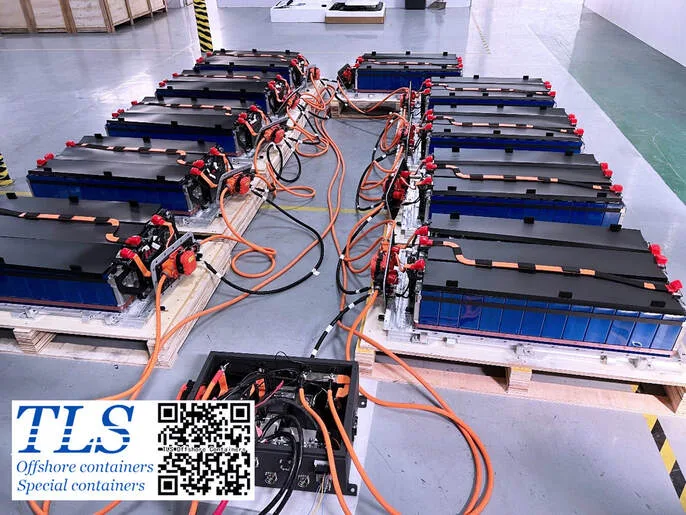
BMS (Battery Management System) is one of the core subsystems of battery energy storage systems. It is a system that uses energy storage as a carrier to manage the storage of electric energy and the supply of electric energy over a certain period. The electric energy managed by BMS has functions such as smooth transition of electric energy, peak shaving and valley filling, frequency regulation and voltage regulation. It is also a device that monitors the status of energy storage batteries, intelligently manages, and maintains each battery unit, prevents over-charging and over-discharging of batteries, prolongs battery life and monitors battery status.
Its principal works are:
Its principal works are:
- Battery status monitoring: Single battery voltage, battery pole temperature, battery loop current, battery pack terminal voltage, battery system insulation resistance, etc.
- Battery state analysis: State of charge, power state, aging state.
- Battery safety protection: overcurrent protection, overcharge protection, overtemperature protection
- Energy control management: charge control, discharge control, balance control
- Battery information management: battery information display, battery history information storage, information interaction within and outside the system
- Published on
Why is sewage treatment necessary? Sewage is divided into domestic and industrial wastewater, which pollutes water resources so seriously that it has begun to affect people's normal lives. A variety of industrial wastewater and domestic wastewater discharged in large quantities, has polluted many water resources, making our lives available clean resources of water is increasingly lacking.
The harm caused by sewage is still expanding. The only way to better mitigate this vicious cycle of sewage pollution is to make more rational use of limited resources through industrial wastewater treatment. The treatment of wastewater discharged from our industrial production with sewage treatment equipment can make the completion of the purification of sewage to get the opportunity to use again, and also play a good role in protecting the environment, because some chemical plants excluded from the sewage has a lot of corrosive substances in it, if not industrial sewage treatment is discharged, it will cause great harm and pollution to the living environment, so that the conduct of Industrial sewage treatment work becomes very necessary.
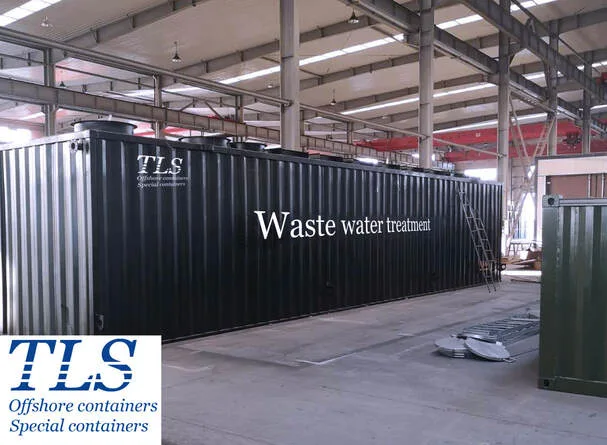
TLS intelligent containerized wastewater treatment system or sewage treatment plant (STP) is a modular system where all wastewater treatment equipment is completely preinstalled in ISO standard or offshore standard containers. Our containerized sewage treatment plant (STP) is made for easy setup and relocation. This solution is ideal for remote locations such as mining camps and oil rig sites.
The harm caused by sewage is still expanding. The only way to better mitigate this vicious cycle of sewage pollution is to make more rational use of limited resources through industrial wastewater treatment. The treatment of wastewater discharged from our industrial production with sewage treatment equipment can make the completion of the purification of sewage to get the opportunity to use again, and also play a good role in protecting the environment, because some chemical plants excluded from the sewage has a lot of corrosive substances in it, if not industrial sewage treatment is discharged, it will cause great harm and pollution to the living environment, so that the conduct of Industrial sewage treatment work becomes very necessary.
TLS intelligent containerized wastewater treatment system or sewage treatment plant (STP) is a modular system where all wastewater treatment equipment is completely preinstalled in ISO standard or offshore standard containers. Our containerized sewage treatment plant (STP) is made for easy setup and relocation. This solution is ideal for remote locations such as mining camps and oil rig sites.
- Published on
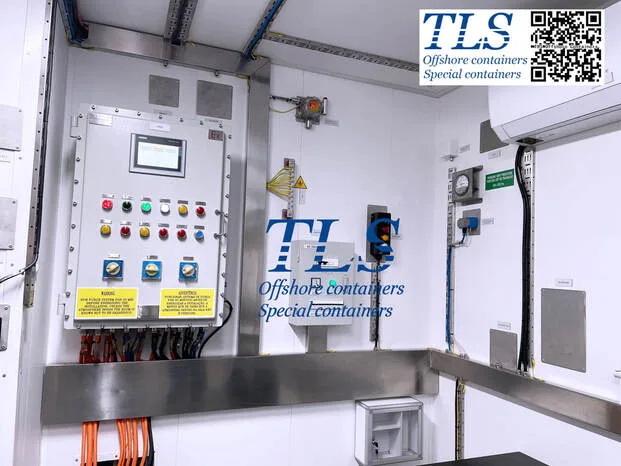
CPFG(combined pressurization fire&gas system) is a complete suite of intelligent booster control systems, typically used in positive pressure containers, with gas detectors, smoke detectors, heat detectors, fire alarms, pressure switches, flow switches, booster fans, emergency stop & alarm mute switches, and other explosion protection equipment.
The CPFG is also connected to a power distribution board, which will be connected by non-explosive devices inside the container, such as sockets, fume hoods, computers, water heaters, etc.
When the power is turned on, the CPFG turns on the booster fan to purge the inside of the container to positive pressure. This prevents dangerous gases entering from outside. When the environment inside is safe, the DB (distribution board) will start up and the internal non-explosive electrical equipment can be used normally. The DB cannot be started if the environment inside the container is not secure.
During operation, if dangerous gases are detected in the container or the positive pressure cannot be maintained, the alarm system will sound an alarm and issue a warning. If the control conditions in the container are not met within the specified time, the non-explosive device is automatically turned off. Therefore, the general equipment in the container is suitable for blast protection purposes.
The CPFG is also connected to a power distribution board, which will be connected by non-explosive devices inside the container, such as sockets, fume hoods, computers, water heaters, etc.
When the power is turned on, the CPFG turns on the booster fan to purge the inside of the container to positive pressure. This prevents dangerous gases entering from outside. When the environment inside is safe, the DB (distribution board) will start up and the internal non-explosive electrical equipment can be used normally. The DB cannot be started if the environment inside the container is not secure.
During operation, if dangerous gases are detected in the container or the positive pressure cannot be maintained, the alarm system will sound an alarm and issue a warning. If the control conditions in the container are not met within the specified time, the non-explosive device is automatically turned off. Therefore, the general equipment in the container is suitable for blast protection purposes.
- Published on
For containerized energy storage, due to the increasing integration of the existing containerized energy storage system , it integrates intelligent equipment such as uninterruptible power supply, battery pack, precision air conditioning, monitoring equipment, etc., with rain-proof, fog-proof, dust-proof, sand-proof, lightning-proof, anti-theft effect, etc., to meet various usage environments.
With the concept of modularization and promotion, the container as a good carrier, with high reliability, high convenience, low power consumption and monitoring perfect characteristics, so become an important part of the moderation, all kinds of containerized energy storage, containerized data center, containerized generator set and so on came into being, extremely good to promote the development of modularization.
Compared with the traditional fixed energy storage power station, energy storage containers allow ocean and road transport, portable and not limited by geographical restrictions. With the future of battery technology breakthroughs, the cost of energy storage containers is expected to be significantly reduced, the prospect is worth looking forward to.
With the concept of modularization and promotion, the container as a good carrier, with high reliability, high convenience, low power consumption and monitoring perfect characteristics, so become an important part of the moderation, all kinds of containerized energy storage, containerized data center, containerized generator set and so on came into being, extremely good to promote the development of modularization.
Compared with the traditional fixed energy storage power station, energy storage containers allow ocean and road transport, portable and not limited by geographical restrictions. With the future of battery technology breakthroughs, the cost of energy storage containers is expected to be significantly reduced, the prospect is worth looking forward to.
- Published on
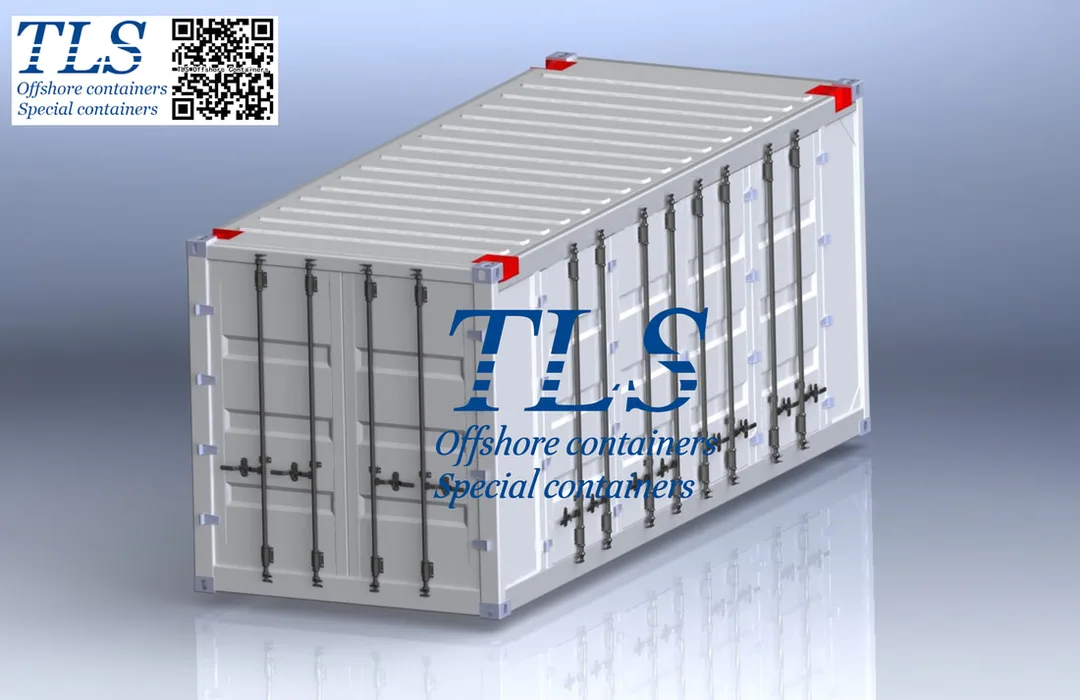
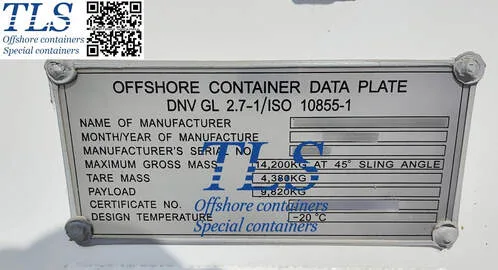
DET NORSKE VERITAS (DNV) is an autonomous and independent foundation whose goal is to protect life, property, and the environment at sea and on land. DNV undertakes classification, certification and other verification and consulting services related to the quality of ships, offshore equipment and facilities, and onshore industries worldwide, and conducts research related to these functions.
The DNV 2.7-1 certified offshore container is specifically designed for dynamic hoisting with eye pad devices and DNV certified slings fitted with shackles.
They are checked during the design phase, material procurement, production, and final loading and NDE testing. Not only are prototypes tested, but a specific number of units are randomly selected from each batch for testing at a rate five times the rate of ISO standard container testing.
The containers have a solid steel structure, including floors. They weigh almost twice as much as an ISO container of the same size, which is critical to their ability to maintain an upright position while being transported in rough seas. They must be equipped with DNV approved slings, stronger steel, stricter production specifications and have all the test documentation to prove their reliability in harsh offshore conditions.
Classification societies certify containers
The DNV 2.7-1 certified offshore container is specifically designed for dynamic hoisting with eye pad devices and DNV certified slings fitted with shackles.
They are checked during the design phase, material procurement, production, and final loading and NDE testing. Not only are prototypes tested, but a specific number of units are randomly selected from each batch for testing at a rate five times the rate of ISO standard container testing.
The containers have a solid steel structure, including floors. They weigh almost twice as much as an ISO container of the same size, which is critical to their ability to maintain an upright position while being transported in rough seas. They must be equipped with DNV approved slings, stronger steel, stricter production specifications and have all the test documentation to prove their reliability in harsh offshore conditions.
Classification societies certify containers
- 1. Design evaluation: details of materials, cargo handling, container lifting and cargo tightening inside the cantainer.
- 2. Manufacturing process: certified inspectors authenticate and test raw materials to confirm that welder qualification, welding process and non-destructive carbon damage work meet the requirements
- 3. Test: Four-point lift, two-point lift, tilt test and drop test
- Published on
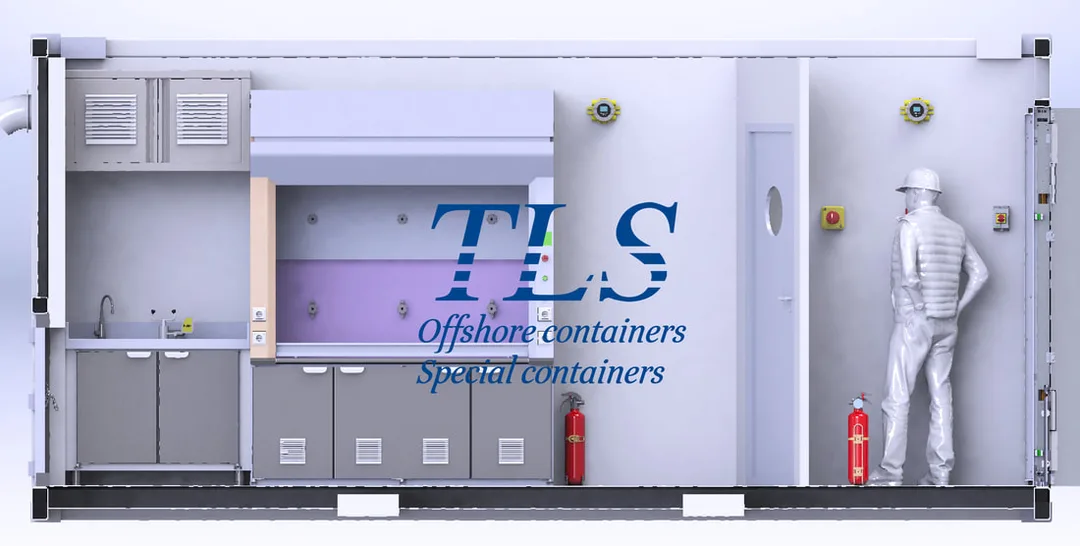
Land-based oil exploration and offshore platform oil exploration areas have the potential to produce explosive gases, and for areas where fires and explosions may occur are known as hazardous areas and are generally divided into three zones - Zone 0, Zone 1, and Zone 2. Modern drilling and exploration sites require strict explosion-proof performance of the equipment on site, so TLS provides the perfect solution with positive pressure explosion-proof containers
The principle of the positive pressure explosion-proof container is to achieve explosion-proof technical requirements through the container shell, so that all the regular non-explosion-proof machinery installed in the container achieve the purpose of explosion-proof.
The positive pressure ventilation system is the key to making the container explosion-proof. When the total power supply is turned on, firstly the system automatically turns on the explosion-proof blast system. The explosion-proof centrifugal fan extracts fresh air from 30 meters outside the danger zone into the positive pressure container. The air in the positive pressure container is purged and a positive pressure of more than 50pa is established. The total power supply is automatically turned on when the control conditions are met, then the power supply can be turned on to control the power supply and turn on other electrical equipment in the positive pressure container.
In the process of turning on or in the operation of the equipment in the container, if the explosion-proof control system monitors the presence of dangerous gases in the container or fails to reach the corresponding positive pressure, the alarm system will alarm and warn, and if the control conditions in the container are still not met within the specified time, or if the alarm limits are reached directly, the non-explosion-proof control system in the container will be closed automatically, so as to achieve the purpose of explosion-proof.
The principle of the positive pressure explosion-proof container is to achieve explosion-proof technical requirements through the container shell, so that all the regular non-explosion-proof machinery installed in the container achieve the purpose of explosion-proof.
The positive pressure ventilation system is the key to making the container explosion-proof. When the total power supply is turned on, firstly the system automatically turns on the explosion-proof blast system. The explosion-proof centrifugal fan extracts fresh air from 30 meters outside the danger zone into the positive pressure container. The air in the positive pressure container is purged and a positive pressure of more than 50pa is established. The total power supply is automatically turned on when the control conditions are met, then the power supply can be turned on to control the power supply and turn on other electrical equipment in the positive pressure container.
In the process of turning on or in the operation of the equipment in the container, if the explosion-proof control system monitors the presence of dangerous gases in the container or fails to reach the corresponding positive pressure, the alarm system will alarm and warn, and if the control conditions in the container are still not met within the specified time, or if the alarm limits are reached directly, the non-explosion-proof control system in the container will be closed automatically, so as to achieve the purpose of explosion-proof.
- Published on
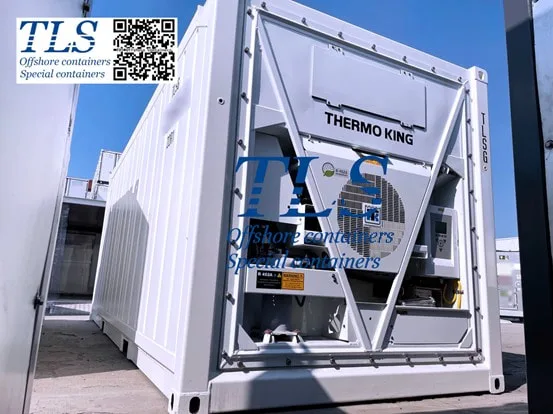
What are the functions of the additional equipment of the TLS offshore container refrigeration unit?
Instructions for additional equipment related to refrigeration units such as CA, MA and humidity controllers.
- CA is short for Controlled Atmosphere. It is an auxiliary facility that controls the levels of CO2 and O2 in the container. The container should be airtight and have a nitrogen generator and source of carbon dioxide (such as a carbon dioxide compressed air bottle or scrubber). In both cases, the oxygen content is controlled by ventilation.
- MA stands for Modified Atmosphere. This means that the container has an interface into which the mixed gas is injected before shipping. During transport, the air composition in the container is no longer controlled.
- Humidifier can use a water source or condensate from an evaporator to humidify the circulating air. Dehumidification can be achieved by evaporative heating devices or chemical reactions. The humidity inside the chamber can only be adequately controlled if both dehumidification and humidification are available.
TLS is an international supplier that can customize onshore | offshore special containerised solutions,Any requirements, please contact us directly:
E-mail: sales@tls-containers.com
Hotline: +65-65637288; +65-31386967
E-mail: sales@tls-containers.com
Hotline: +65-65637288; +65-31386967
- Published on
Offshore containers should be inspected regularly every year. Regular inspections should be performed on the inside and outside of the container when it is empty. TLS has prepared tips for you to check including:
- Inspection of signs and nameplates.
- Weld inspection of main structural members to confirm that there are no visible defects.
- Inspection of lifting lugs and lashing points for deformation, mechanical damage, or other dangerous defects.
- Inspect all structures for corrosion, deformation, mechanical damage, or other dangerous defects.
- Check the condition of the container floor, including the bottom drainage facilities and drainage holes.
- Check for corrosion and mechanical damage inside the fork pockets (where applicable).
- Check the door, frame, seal, hinge, door lock, etc., and confirm the opening and closing of the door.
- Published on
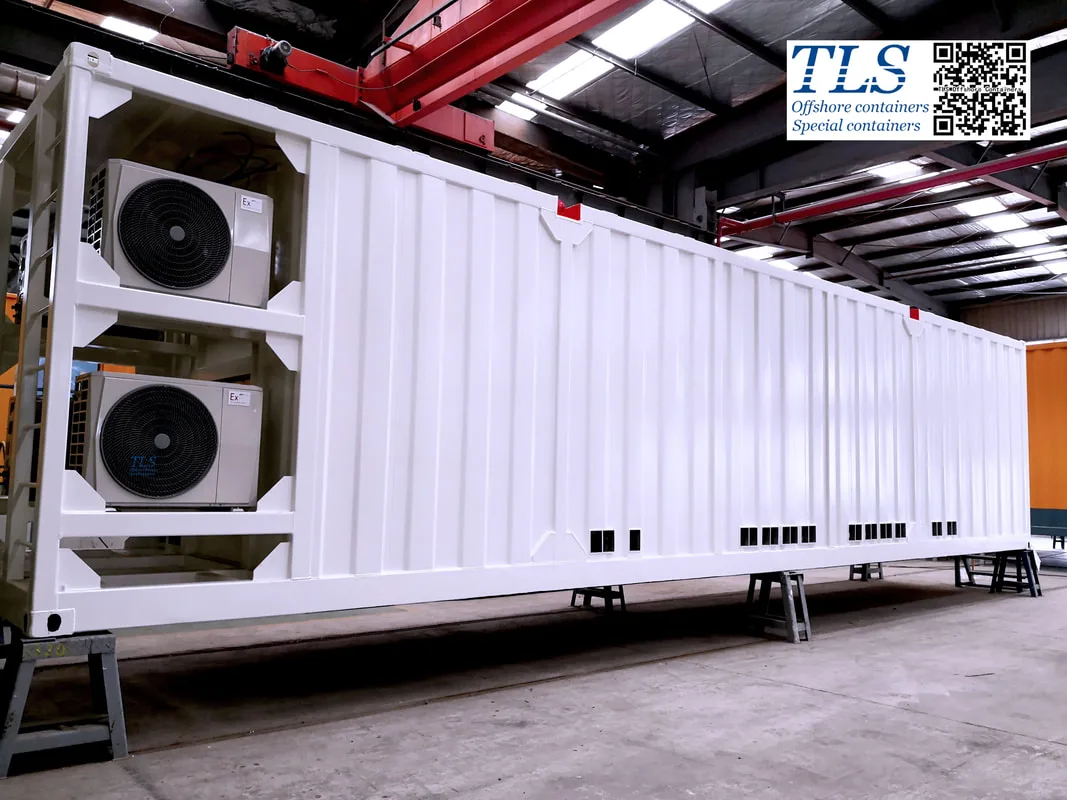
Negative air pressure is a safe containment solution in which more air is taken in than is expelled.
Negative air pressure in the environment does not mean that the actual pressure is negative because, according to science, absolute pressure can never be less than zero. Negative air pressure means that the pressure within an environment is less than the pressure of its surroundings. As air flows from high pressure to low pressure, this difference in pressure level acts as a vacuum effect and causes air to flow in from the outside.
The negative air system produces a vacuum effect or a direction of air flow into the space by creating and maintaining the air pressure differential. In doing so, it restricts the spread of contaminants such as dust and mould and pollutants such as bacteria and viruses from the controlled space to the outside.
This system traps dangerous and infectious particles in the air and removes them by means of a blower and a group of filters.
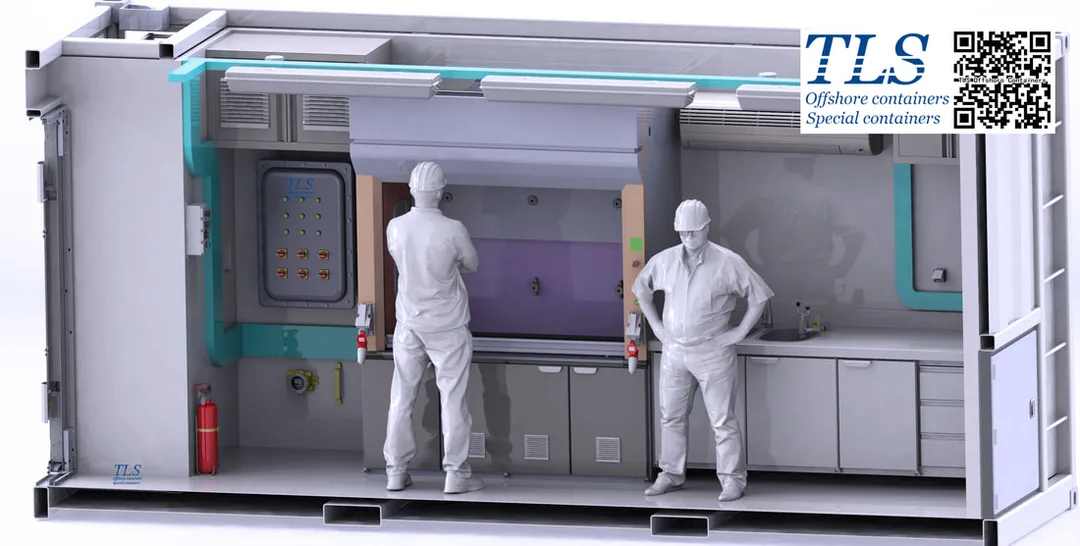
In summary, when the external environment is safe, but toxic and harmful gases are generated inside, negative pressure is preferred
• Modular Petroleum Laboratory
• Laboratory container / cabin
• Blast Resistant Container, Blast proof Container
• Mud Lab
Negative air pressure in the environment does not mean that the actual pressure is negative because, according to science, absolute pressure can never be less than zero. Negative air pressure means that the pressure within an environment is less than the pressure of its surroundings. As air flows from high pressure to low pressure, this difference in pressure level acts as a vacuum effect and causes air to flow in from the outside.
The negative air system produces a vacuum effect or a direction of air flow into the space by creating and maintaining the air pressure differential. In doing so, it restricts the spread of contaminants such as dust and mould and pollutants such as bacteria and viruses from the controlled space to the outside.
This system traps dangerous and infectious particles in the air and removes them by means of a blower and a group of filters.
In summary, when the external environment is safe, but toxic and harmful gases are generated inside, negative pressure is preferred
• Modular Petroleum Laboratory
• Laboratory container / cabin
• Blast Resistant Container, Blast proof Container
• Mud Lab
- Published on
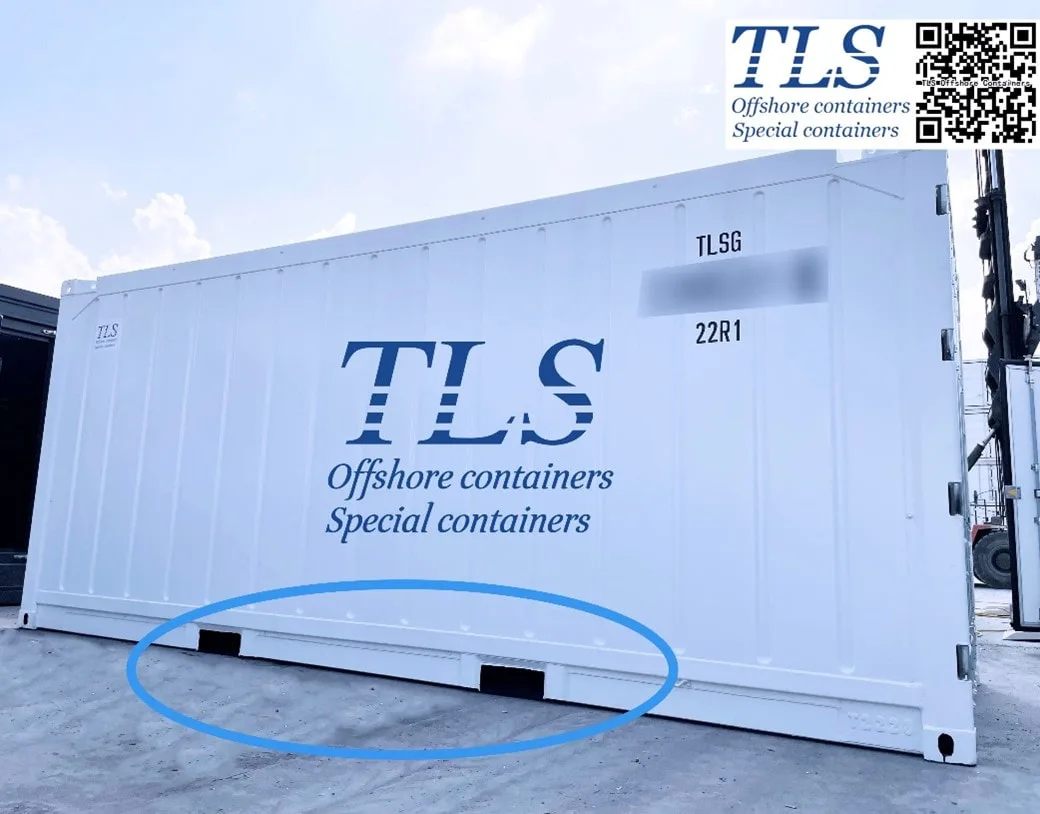
To facilitate the loading and unloading of the cargo, the bottom of TLS offshore containers is usually designed with fork pockets, which are required as follows:
1. If provided, the fork pockets shall be arranged in the bottom structure with the top closed to penetrate the bottom and prevent the offshore container from overturning from the fork tine.
2. The net opening size of the fork pocket of the offshore container shall not be less than 200mm×90mm.
3. Considering the length, height, width, and rated weight of the offshore container, the position of the fork pocket should ensure the stability of the container when it is transported by the forklift. The fork pockets should be as far apart as possible, generally not less than 900 mm from the center, but not more than 2,050 mm.
4. The bottom plate of the fork pockets can be closed completely, but openings are recommended for maintenance and to reduce the risk of loose items being left in the fork pockets, thereby preventing items from falling during the lifting process. Where openings are provided, the size and position of the opening should be set to avoid jamming or being damaged by the tines The opening at the bottom of the fork pockets are not allowed at the bottom side rails, and the distance between the opening and the bottom side rails should not be less than 200mm.
5. The weakening of vertical shear strength of bottom side rails by fork pockets opening should be taken into account when calculating the bottom side rails strength. In general, a reinforcement plate should be attached to the top of the bottom side rail. The reinforcement plate should be in the same plane as the bottom side rails web. The reinforcement plate should be extended by at least 100mm at both ends. At this point, the weld between the reinforcement plate and the bottom side rail should be completely melted through.
1. If provided, the fork pockets shall be arranged in the bottom structure with the top closed to penetrate the bottom and prevent the offshore container from overturning from the fork tine.
2. The net opening size of the fork pocket of the offshore container shall not be less than 200mm×90mm.
3. Considering the length, height, width, and rated weight of the offshore container, the position of the fork pocket should ensure the stability of the container when it is transported by the forklift. The fork pockets should be as far apart as possible, generally not less than 900 mm from the center, but not more than 2,050 mm.
4. The bottom plate of the fork pockets can be closed completely, but openings are recommended for maintenance and to reduce the risk of loose items being left in the fork pockets, thereby preventing items from falling during the lifting process. Where openings are provided, the size and position of the opening should be set to avoid jamming or being damaged by the tines The opening at the bottom of the fork pockets are not allowed at the bottom side rails, and the distance between the opening and the bottom side rails should not be less than 200mm.
5. The weakening of vertical shear strength of bottom side rails by fork pockets opening should be taken into account when calculating the bottom side rails strength. In general, a reinforcement plate should be attached to the top of the bottom side rail. The reinforcement plate should be in the same plane as the bottom side rails web. The reinforcement plate should be extended by at least 100mm at both ends. At this point, the weld between the reinforcement plate and the bottom side rail should be completely melted through.