- Published on
1.Keeps the temperature cold
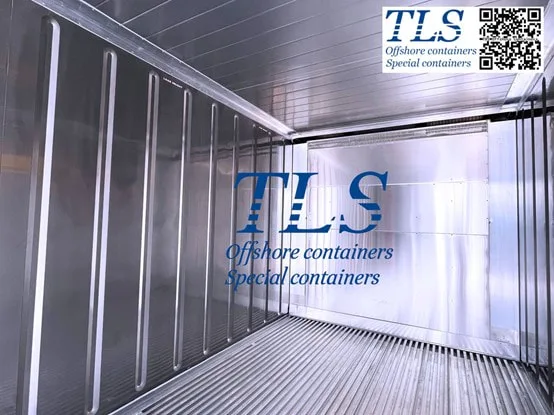
The refrigeration unit distributes cold air through the floor of a refrigerated container The floor of the container has slots, also known as T-shaped covers. This T-shaped cover allows a constant supply of cold air around the shipment.
If you are considering using a refrigerated container, you should be aware that it cannot reduce the temperature of your goods. A refrigerated container only maintains the desired temperature. Therefore, you will have to pre-cool your cargo to the temperature you want the reefer to maintain.
2.The genset provides electricity
Genset is short for generating set. It provides electricity to the refrigeration unit to operate. A refrigerator is usually connected to a power source on ships. But in the case of extremely sensitive cargoes that could spoil outside a temperature range, gensets provide a back-up power source. It is best to use a refrigerator equipped with a genset to ensure the safety of the cargo.
3.Ventilation keeps cargo cool
The purpose of a refrigerated container is to keep the cargo cool. Fruit and vegetables release heat, water, and CO₂. If these gases are not removed, they can damage the cargo leading to uncontrolled ripening, ageing, and altered taste. For this reason, refrigerators are kept ventilated with fresh air.
The refrigeration unit distributes cold air through the floor of a refrigerated container The floor of the container has slots, also known as T-shaped covers. This T-shaped cover allows a constant supply of cold air around the shipment.
If you are considering using a refrigerated container, you should be aware that it cannot reduce the temperature of your goods. A refrigerated container only maintains the desired temperature. Therefore, you will have to pre-cool your cargo to the temperature you want the reefer to maintain.
2.The genset provides electricity
Genset is short for generating set. It provides electricity to the refrigeration unit to operate. A refrigerator is usually connected to a power source on ships. But in the case of extremely sensitive cargoes that could spoil outside a temperature range, gensets provide a back-up power source. It is best to use a refrigerator equipped with a genset to ensure the safety of the cargo.
3.Ventilation keeps cargo cool
The purpose of a refrigerated container is to keep the cargo cool. Fruit and vegetables release heat, water, and CO₂. If these gases are not removed, they can damage the cargo leading to uncontrolled ripening, ageing, and altered taste. For this reason, refrigerators are kept ventilated with fresh air.
- Published on
Movable container modules are becoming more and more popular in both offshore and onshore work areas. Because of its mobility, security, customizability, durability and cost-effectiveness, it can better meet people's needs.
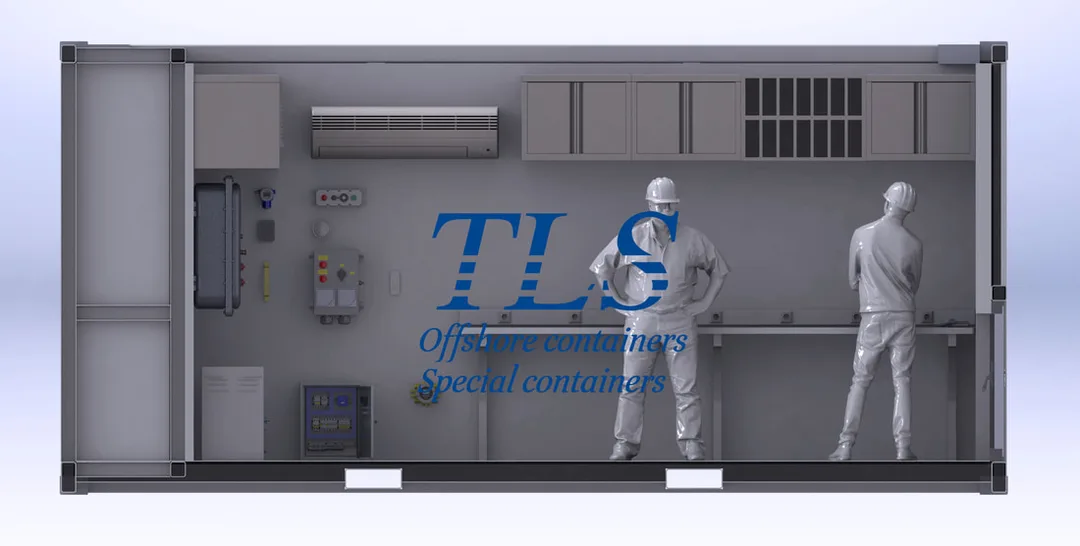
Take the workshop container as an example.
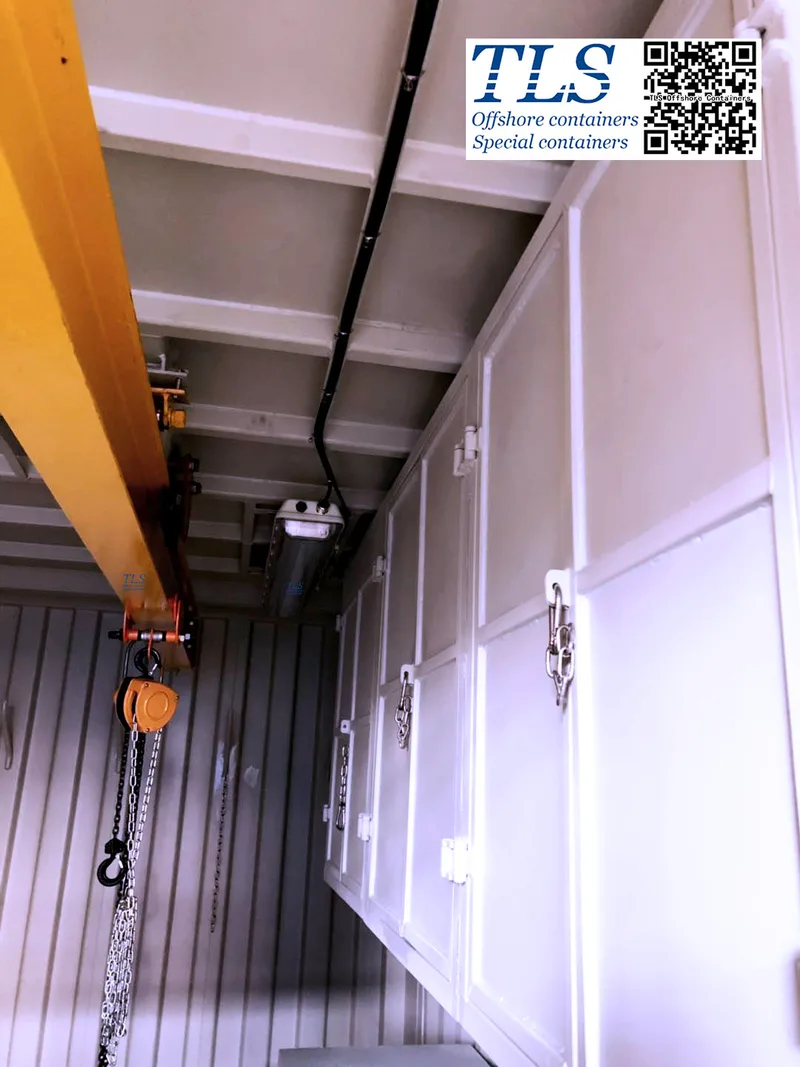
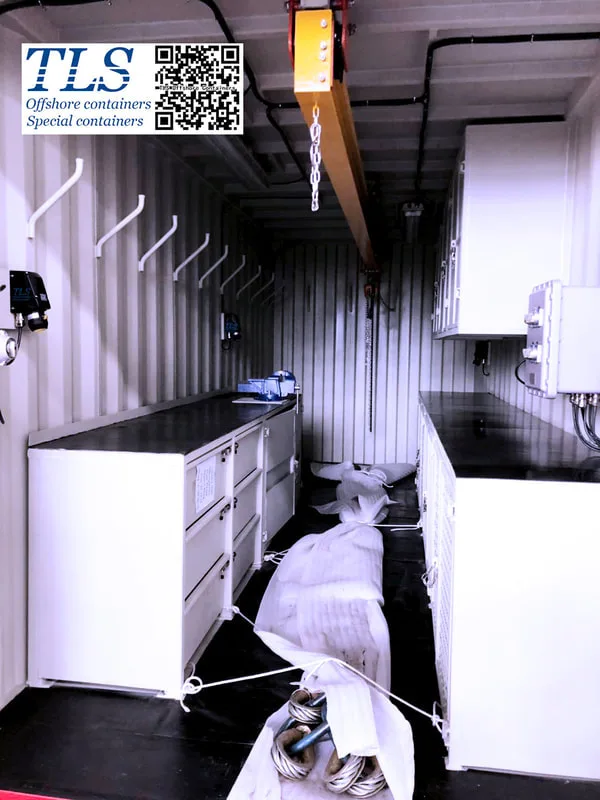
This type of container workshop is windproof, waterproof and fireproof, has good sealing, can be easily transferred, and is easy to install. As a tool workshop| storage container workshop, it is cost-effective and provides more convenience for work and life.
Any related needs, please feel free to contact us.
Take the workshop container as an example.
- The container shell provided by TLS can meet the standard of DNV 2.7-1/EN 12079, and can also meet the fire rating of A60 according to the needs of customers.
- The size of the container can be 10 feet|15 feet|20 feet or other customized sizes.
- Enclosures can be equipped with double doors for equipment, emergency escape hatches, viewing windows/panels, cable access and a range of other customer specified accesses such as bulkheads, tool hatches, pipe crossings and structural connections/brackets etc.
- The mobile container workshop can be equipped with beams, cranes, tool racks, vices, workbenches, cabinets, drawers, bread bench vices, drills, grinders, pneumatic systems, water systems and local fire extinguishers according to customer needs.
- In order to ensure the comfort of space, air conditioning, ventilation, toilets, etc. can also be installed.
This type of container workshop is windproof, waterproof and fireproof, has good sealing, can be easily transferred, and is easy to install. As a tool workshop| storage container workshop, it is cost-effective and provides more convenience for work and life.
Any related needs, please feel free to contact us.
- Published on
Energy storage is the process of storing energy through a medium or device and releasing it when it is needed. When we talk about energy storage, we are mainly referring to the storage of electrical energy. In fact, energy storage itself is not an emerging technology, but from an industrial point of view it is in its infancy and development stage. Energy storage technology is a key node for future energy systems to be flexible, inclusive, and balanced.
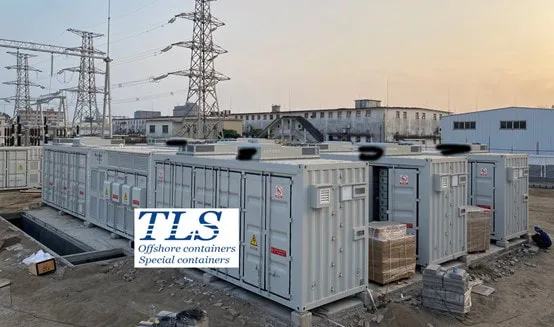
TLS containerized energy storage system (BESS) is the perfect solution for large-scale energy storage projects. The energy storage containers can be used in the integration of various storage technologies and for different purposes.
- System stability is ensured by the energy storage and buffering of the energy storage system, which allows the system to operate at a stable output level even in the event of rapid load fluctuations.
- Energy for back-up, energy storage systems can act as a back-up and transition in the event that clean energy generation is not operating properly.
- Improving power quality and reliability, energy storage systems also prevent voltage spikes, voltage drops, and grid fluctuations caused by external disturbances on the load from having a major impact on the system, and the use of a sufficient number of energy storage systems ensures the quality and reliability of the power output.
TLS containerized energy storage system (BESS) is the perfect solution for large-scale energy storage projects. The energy storage containers can be used in the integration of various storage technologies and for different purposes.
- Published on
ROV stands for Remotely Operated Vehicle; ROVs are unoccupied, highly mobile underwater machines that can be used to explore the depths of the ocean while being operated by a person on the surface.
Remotely operated vehicles (ROVs) allow us to explore the ocean without actually being in it. These underwater machines are usually controlled by a person on a surface vessel, using a joystick in a similar way to play a video game. A set of cables or tethers connects the ROV to the ship, sending electrical signals back and forth between the operator and the vehicle.
ROVs have made exploration of several deep-sea gas and oil reserves much easier because many oil reserves are difficult for divers to find.
Precisely because of the uses and characteristics of ROVs, the TLS ROV cabin is designed to provide personnel with the facility to operate the ROV in a safe, comfortable, and climate-controlled environment.
The TLS ROV cabins are equipped to a high standard and specification. We can design the equipment requirements internally to your specifications to achieve the most space efficient layout. Units can be modified or customized to meet customer requirements.
The TLS ROV cabins have the following standard specifications:
Remotely operated vehicles (ROVs) allow us to explore the ocean without actually being in it. These underwater machines are usually controlled by a person on a surface vessel, using a joystick in a similar way to play a video game. A set of cables or tethers connects the ROV to the ship, sending electrical signals back and forth between the operator and the vehicle.
ROVs have made exploration of several deep-sea gas and oil reserves much easier because many oil reserves are difficult for divers to find.
Precisely because of the uses and characteristics of ROVs, the TLS ROV cabin is designed to provide personnel with the facility to operate the ROV in a safe, comfortable, and climate-controlled environment.
The TLS ROV cabins are equipped to a high standard and specification. We can design the equipment requirements internally to your specifications to achieve the most space efficient layout. Units can be modified or customized to meet customer requirements.
The TLS ROV cabins have the following standard specifications:
- Description: A60 rated, Zone1/Zone2 cabin (for offshore application)
- Structural Rating: DNV 2.7-1/EN12079
- Hazardous Area Classification: Zone1/Zone2
- Published on
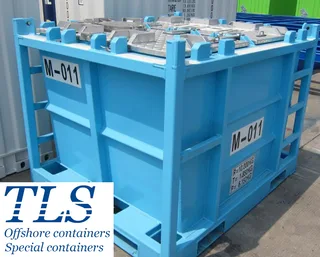
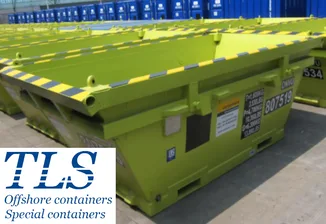
During oil exploration and production, large quantities of well waste fluids and drill cuttings are generated. This drilling waste is disposed of in storage ponds at the well site and can cause serious pollution to the groundwater, surface water and surrounding environment due to leakage, spillage, and flooding. Drilling waste is a long-standing environmental problem in the oilfield, so we have a solution for it.
Offshore cutting skips & waste skips provided by TLS Offshore Containers International are designed, manufactured and tested in accordance with requirements of the following latest editions standards and regulations
Offshore cutting skips & waste skips provided by TLS Offshore Containers International are designed, manufactured and tested in accordance with requirements of the following latest editions standards and regulations
- DNV2.7-1 - Offshore containers
- EN12079-Offshore Containers-Design, construction, testing, inspection marking.
- ISO1161-Specification of corner fittings for series 1 freight containers.
- Published on
1.How to deal with the insulation problem of accommodation containers in high temperature climate?
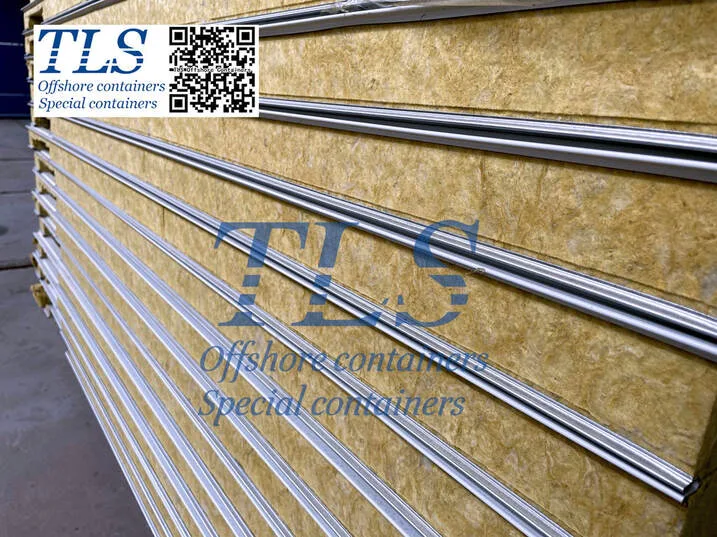
The most popular insulation material for container homes is rock wool. Rock wool products are made of high-quality basalt and dolomite as the main raw materials. After melting at a high temperature above 1450°C, the fiber is formed by high-speed centrifugation using the world's advanced four-axis centrifuge. Pendulum method, plus three-dimensional cotton laying method, curing and cutting to form a thermal insulation layer. So don't worry about insulation.
2. Does the container house need a foundation?
The shipping container house can choose a natural base.
When the bearing capacity of the foundation soil of the ground floor house is less than 60kPa or the bearing capacity of the multi-storey house structure is less than 100kPa, and the foundation soil is soft soil or the foundation is poor, the foundation treatment should be carried out. implement.
3. How to install the doors and windows of the prefab container homes?
Doors and windows can be installed according to personal preference, glass doors and wooden doors can be customized.
Windows can also be customized as round windows, shutters, floor-to-ceiling windows, etc.
The most popular insulation material for container homes is rock wool. Rock wool products are made of high-quality basalt and dolomite as the main raw materials. After melting at a high temperature above 1450°C, the fiber is formed by high-speed centrifugation using the world's advanced four-axis centrifuge. Pendulum method, plus three-dimensional cotton laying method, curing and cutting to form a thermal insulation layer. So don't worry about insulation.
2. Does the container house need a foundation?
The shipping container house can choose a natural base.
When the bearing capacity of the foundation soil of the ground floor house is less than 60kPa or the bearing capacity of the multi-storey house structure is less than 100kPa, and the foundation soil is soft soil or the foundation is poor, the foundation treatment should be carried out. implement.
3. How to install the doors and windows of the prefab container homes?
Doors and windows can be installed according to personal preference, glass doors and wooden doors can be customized.
Windows can also be customized as round windows, shutters, floor-to-ceiling windows, etc.
- Published on
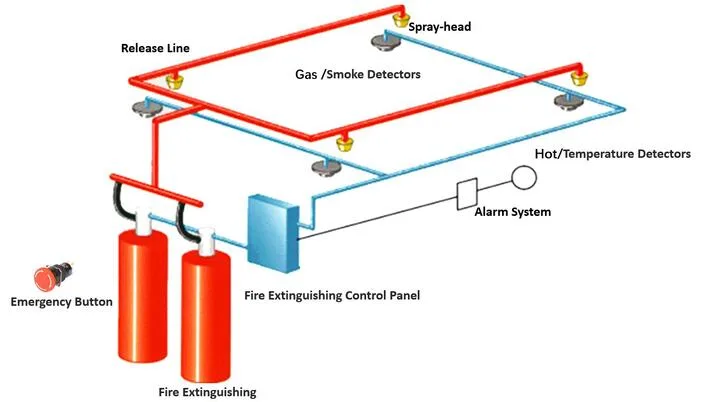
1. Reserved openings for energy storage containers: the common sizes of containers are 40ft and 20ft, and they can also be customized according to customer needs. The fire protection system of energy storage containers is a separate system, including smoke detectors and temperature detectors. , gas fire extinguishing control panel, emergency start, stop button, gas proof indicator and other components, all of which need to be reserved openings, especially the openings for pressure relief ports, which must be designed before the container is integrated. It will cause water leakage and bring security risks to the electrical system, and the fire protection system will also increase the risk of not spraying due to short circuit.
2. Gas fire extinguishing device: The location selection and fixing method of the fire extinguishing device are the key points. The container is relatively long and narrow. If only the fire extinguishing device is placed in the corner and no release pipeline is arranged, it will be difficult for the agent to reach the other end of the container, and it is difficult to achieve an effective fire extinguishing effect, especially for a 40ft container. For the fixed method, the reinforcement method should be considered in the early stage, rather than the temporary solution of the fire extinguishing device, which will cause a lot of rework and hidden dangers.
3. Rainproof problem: When the container battery energy storage is placed in the open air, the outdoor alarm device should be rainproof or ordinary rainproof measures should be used. Either way, it is fine. This is very important, otherwise the fire alarm system will be corroded or short-circuit and do not spray as mentioned in the first item.
4. Power-cutting problem: the non-fire-fighting power in the containerized energy storage system generally includes air conditioning or fresh air system, lighting, etc. When the smoke and temperature senses act at the same time, the power supply is cut off. This needs to be considered in the early design. At the same time, pay attention to the reasonable arrangement of the wiring of these systems and the wiring of the fire extinguishing device, so as not to be confused, so as to avoid interference and false alarms or false sprays.
2. Gas fire extinguishing device: The location selection and fixing method of the fire extinguishing device are the key points. The container is relatively long and narrow. If only the fire extinguishing device is placed in the corner and no release pipeline is arranged, it will be difficult for the agent to reach the other end of the container, and it is difficult to achieve an effective fire extinguishing effect, especially for a 40ft container. For the fixed method, the reinforcement method should be considered in the early stage, rather than the temporary solution of the fire extinguishing device, which will cause a lot of rework and hidden dangers.
3. Rainproof problem: When the container battery energy storage is placed in the open air, the outdoor alarm device should be rainproof or ordinary rainproof measures should be used. Either way, it is fine. This is very important, otherwise the fire alarm system will be corroded or short-circuit and do not spray as mentioned in the first item.
4. Power-cutting problem: the non-fire-fighting power in the containerized energy storage system generally includes air conditioning or fresh air system, lighting, etc. When the smoke and temperature senses act at the same time, the power supply is cut off. This needs to be considered in the early design. At the same time, pay attention to the reasonable arrangement of the wiring of these systems and the wiring of the fire extinguishing device, so as not to be confused, so as to avoid interference and false alarms or false sprays.
- Published on
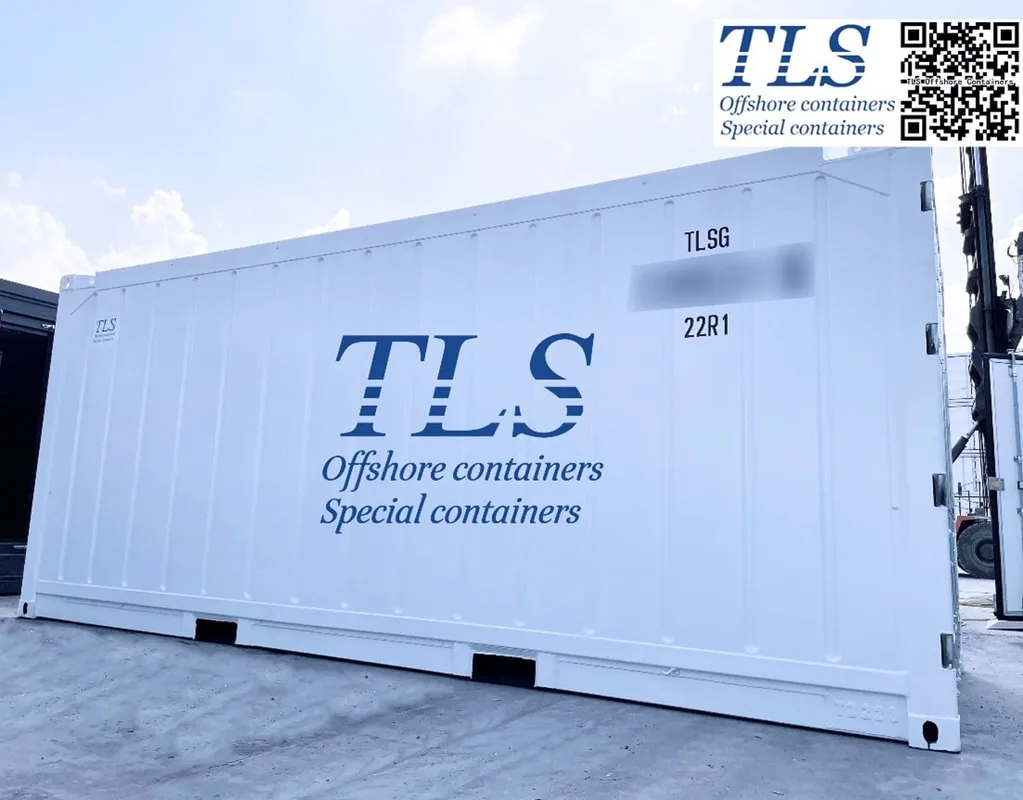
Offshore shipping containers are widely used for the transportation and hoisting of goods or equipment between offshore facilities and ships in harsh environments with high temperature, high humidity, and high salt spray. Therefore, there are extremely high requirements for the anti-corrosion of the surface of the offshore container.
The coating process steps of TLS are as follows:
1. Preprocessing
Remove the oxide scale, rust, grease, dirt, and other attachments on the surface of the exposed steel structure to ensure the anti-corrosion performance of the coating; zinc-rich primers are applied automatically on the assembly line after the steel is shot-blasted. It temporarily protects the surface of freshly shot steel, preventing it from rusting in the gaps made during the container's manufacture.
2. Shot-blasted the whole container
Before painting, the surface of the weld and the heat sensitive area of the weld should be shot-blasted. The surface of the steel structure should be free of burrs, bumps, dust, dirt, no painting, sharp edges, and all rough-cut edges should be ground to a radius of at least 2mm;
3. Pre-coating
Pre-coating is applied to areas that are not easy to coat, including, but not limited to, the edges of steel plates, welds, corners, bolt holes, beam edges, and other areas that are difficult to paint.
4. Spray
Each coat should be applied evenly over the entire surface, and defects such as missing paint, sags, and drips must be avoided. And each coating should contain no pinholes, blisters, and leaks.
5. Drying: Speed up the curing process.
TLS uses environmentally friendly water-soluble paints, and the coating operators have relevant technical certifications. TLS containers are not prone to corrosion, paint failure, fading and discoloration which can make the container work better for its use value.
The coating process steps of TLS are as follows:
1. Preprocessing
Remove the oxide scale, rust, grease, dirt, and other attachments on the surface of the exposed steel structure to ensure the anti-corrosion performance of the coating; zinc-rich primers are applied automatically on the assembly line after the steel is shot-blasted. It temporarily protects the surface of freshly shot steel, preventing it from rusting in the gaps made during the container's manufacture.
2. Shot-blasted the whole container
Before painting, the surface of the weld and the heat sensitive area of the weld should be shot-blasted. The surface of the steel structure should be free of burrs, bumps, dust, dirt, no painting, sharp edges, and all rough-cut edges should be ground to a radius of at least 2mm;
3. Pre-coating
Pre-coating is applied to areas that are not easy to coat, including, but not limited to, the edges of steel plates, welds, corners, bolt holes, beam edges, and other areas that are difficult to paint.
4. Spray
Each coat should be applied evenly over the entire surface, and defects such as missing paint, sags, and drips must be avoided. And each coating should contain no pinholes, blisters, and leaks.
5. Drying: Speed up the curing process.
TLS uses environmentally friendly water-soluble paints, and the coating operators have relevant technical certifications. TLS containers are not prone to corrosion, paint failure, fading and discoloration which can make the container work better for its use value.
- Published on
As drilling has become more complex, logging has had to adapt and improve as the number of horizontal and directional wells drilled has increased. Measurement with drilling (or MWD) is a type of logging that combines a measurement tool into the drill column and provides real-time information to help with steering the drill.
When drilling quite precise wells, MWD can provide drilling engineers with real-time information to make important decisions while drilling.
Due to the environmental factors in the exploration area, TLS can provide MWD cabin to ensure that MWD work is carried out safely and effectively. To provide a safe and healthy working environment, the TLS MDW cabin has the following standard specifications:
When drilling quite precise wells, MWD can provide drilling engineers with real-time information to make important decisions while drilling.
Due to the environmental factors in the exploration area, TLS can provide MWD cabin to ensure that MWD work is carried out safely and effectively. To provide a safe and healthy working environment, the TLS MDW cabin has the following standard specifications:
- Description: A60 rated, Zone1/Zone2 cabin (for offshore application)
- External dimension: Customized sizes
- Structural Rating: DNV 2.7-1/EN12079
- Hazardous Area Classification: Zone1/Zone2
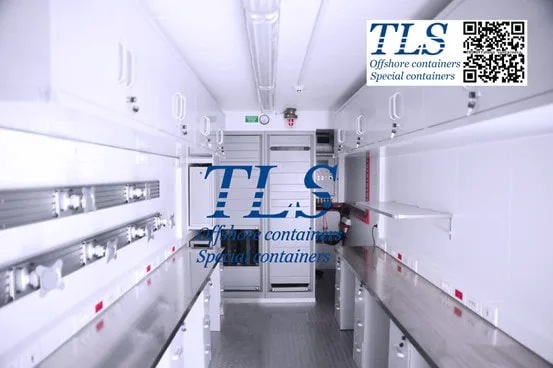
MWD cabin was well packed for delivery
- Published on
When the container is in automatic mode, the system will display different detection states for different detection conditions.
- When alarm for Gas low concentration(≥10%LEL: < 15%LEL) and H2S low concentration (≥8pprn: < 20ppm) and H2 low concentration(≥10%LEL; <15%LEL) and O2 low concentration(≤19%), the corresponding indicator light of "gas/H2S/H2 low concentration alarm indication" and "O2 leak alarm indication" is on; Explosion-proof sound and light will alarm; the fan will keep running and the air change timing is suspended
- When alarm for low differential pressure(<50Pa), Sound and light alarm will be sent out after 10s delay, and the indicator light of ”pressure loss alarm" will be on; If the differential pressure is restored within 60s, the ” pressure loss alarm” indicator light will be off, the alarm will be relieved and the ventilation process will continue; After 60 seconds, the fan power supply will be cut off, the ventilation process will stop, sound and light alarm, unable to enter the ”safe power supply” state.
- When alarm for Gas (≥15%LEL: <60%LEL) / H2S( ≥20ppm)/ H2 (≥ 15%LEL) high concentration , and fire alarm (smoke detector、heat detector、MCP) and local ESD signal will be received, the power supply of the fan will be cut off, and the ventilation process will stop.
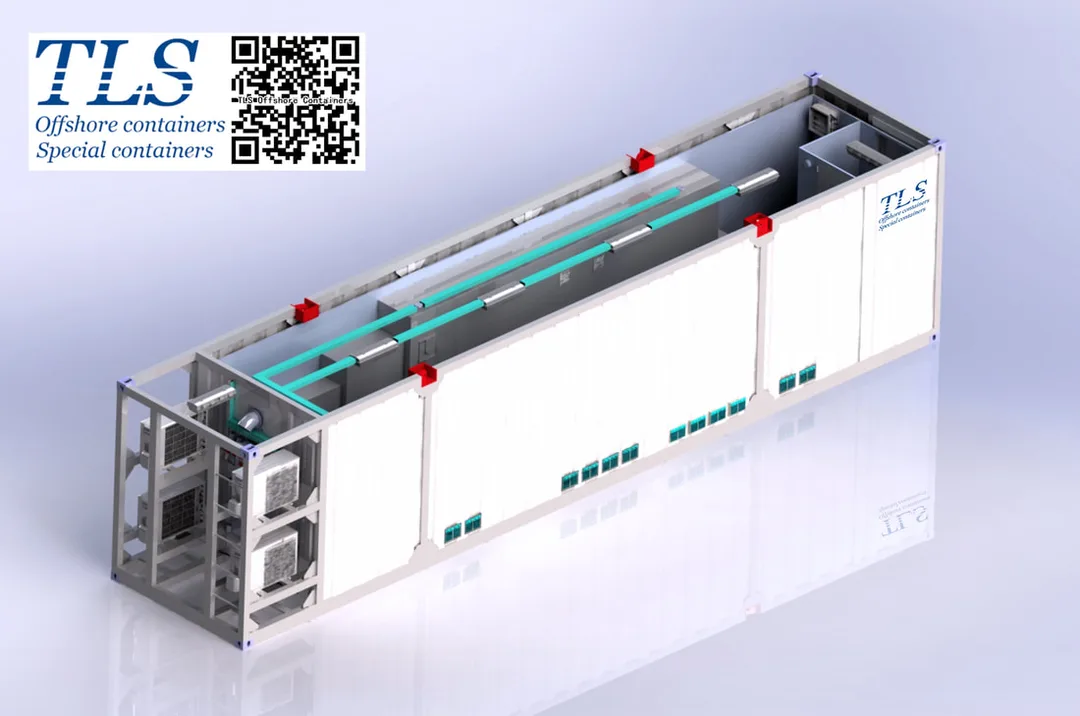
TLS is an international supplier that can customize onshore | offshore special containerised solutions,Any requirements, please contact us directly:
E-mail: sales@tls-containers.com
Hotline: +65-65637288; +65-31386967
E-mail: sales@tls-containers.com
Hotline: +65-65637288; +65-31386967