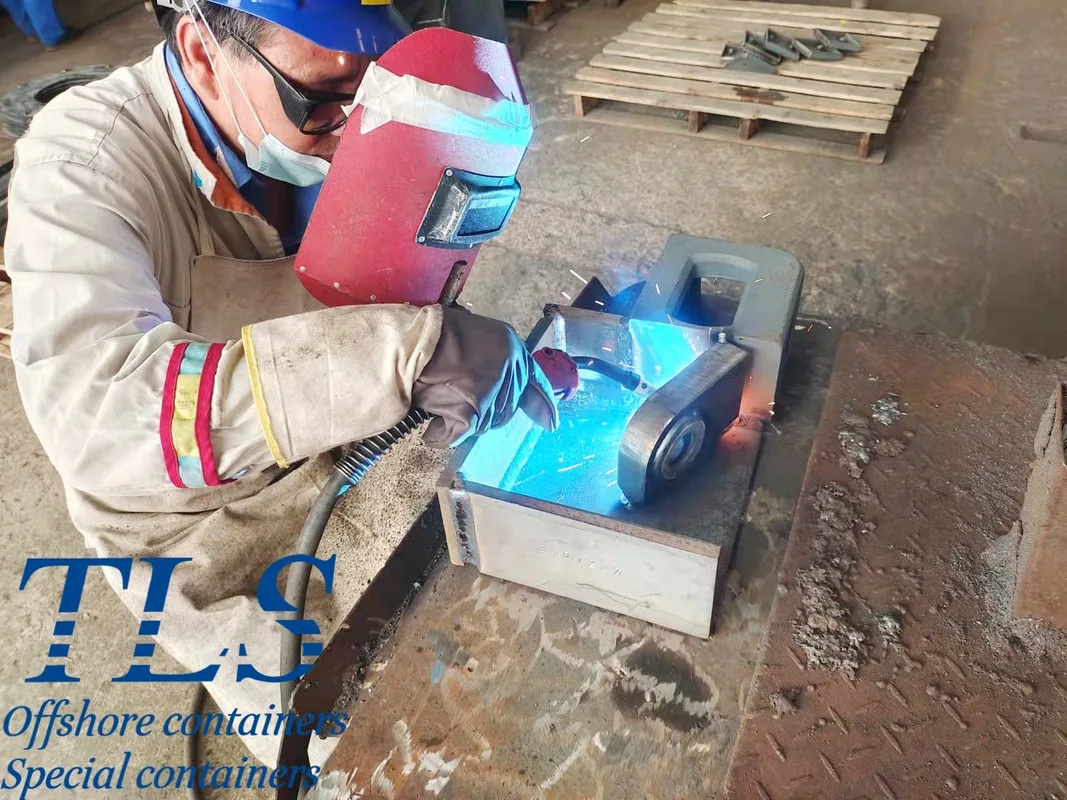
- Published on
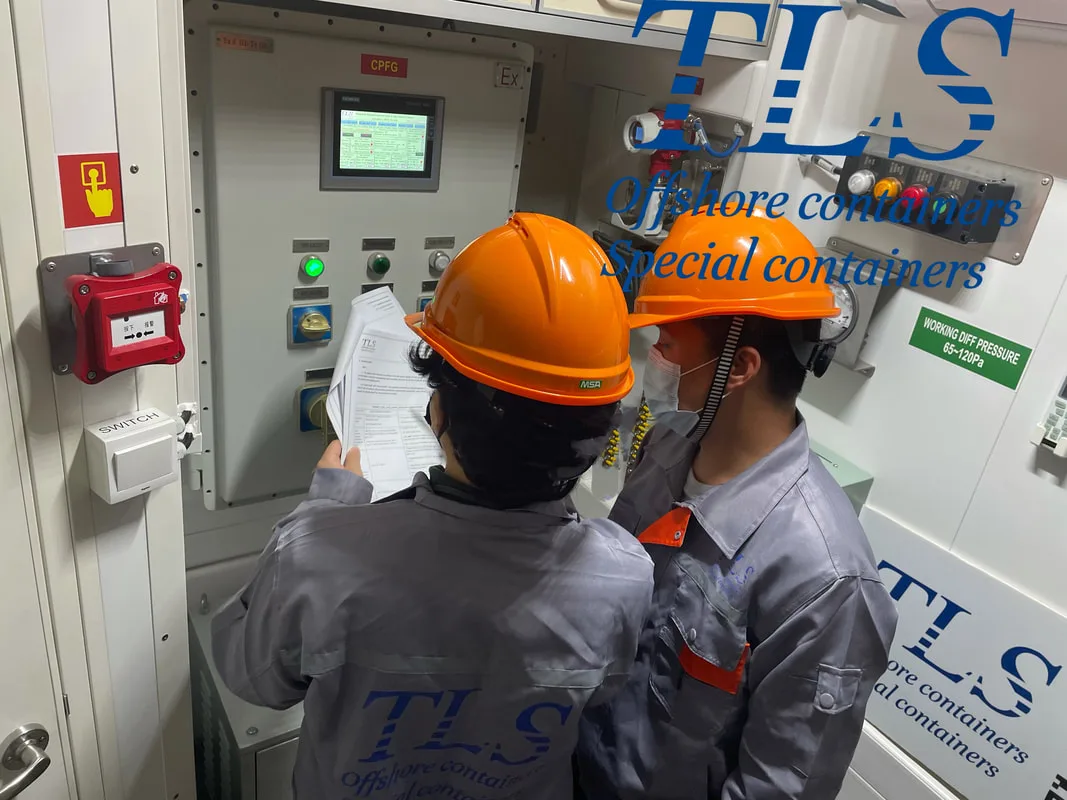
CPFG means "Combinated Pressurization, Fire and Gas" shutdown system. According to IEC60079-13(2019) and "Safety Rules for Offshore Fixed Platforms", the functional container will have a positive pressure air purge mode. When CPFG is turned on, CPFG will first control the blower fan to make the main cabin carry out air change at least 12 times per hour, and make the main cabin reach a positive pressure environment of >=50PA. When the main warehouse to achieve positive pressure 50PA environment, indoor safety zone, cabin DB(distribution board) will get electricity, so that air conditioning, sockets, lights and other electrical appliances get electricity, all sockets, air conditioning machine (non-explosion-proof), part of the lights.
- Published on
What is airlock room?
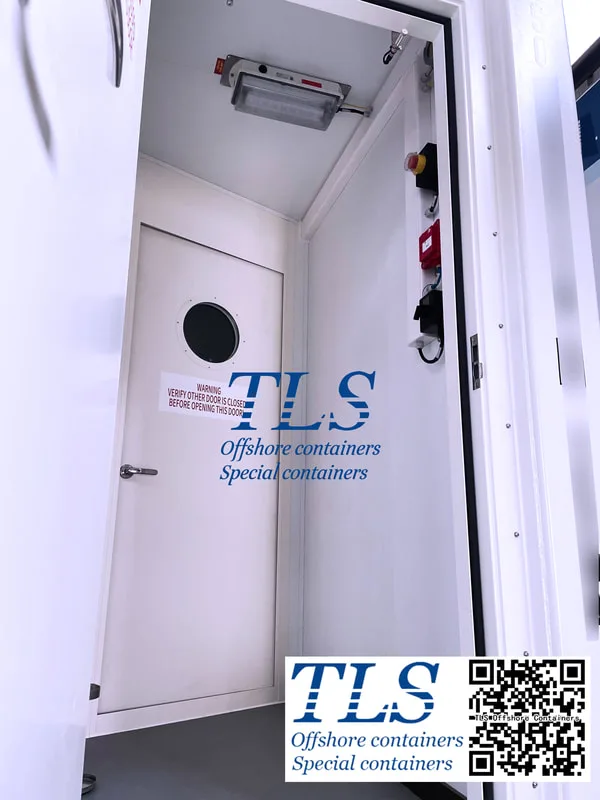
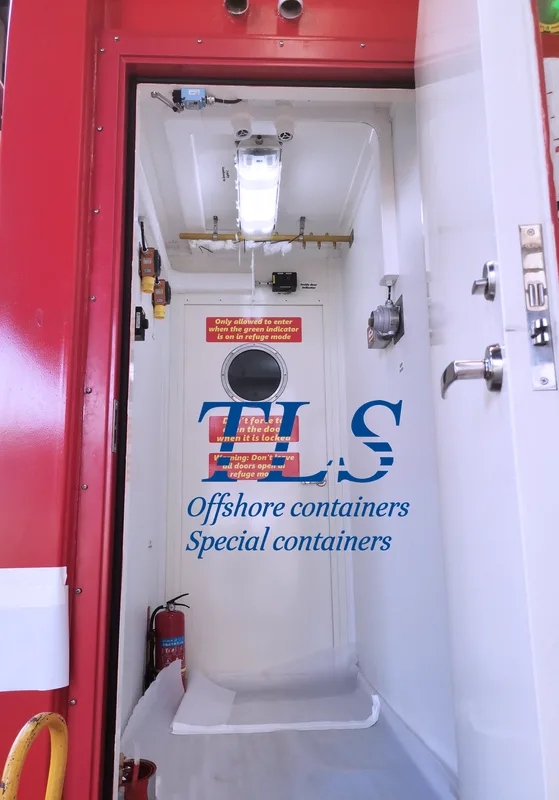
The air lock area is located at the cabin door, separating the cabin door from the work area, and is the transition area into the work area.
How to ensure the pressure balance of the pressurized container?
The inner wall part forming the air lock area is provided with an inner door for entering and leaving the work area. The cabin be provided with a pressure monitoring device to ensure the pressure balance in the cabin.
What is airlock room for?
The installation of the two doors in the airlock area ensures that the protective pressure in the main room does not drop to zero when entering the airlock area after opening the airlock door.
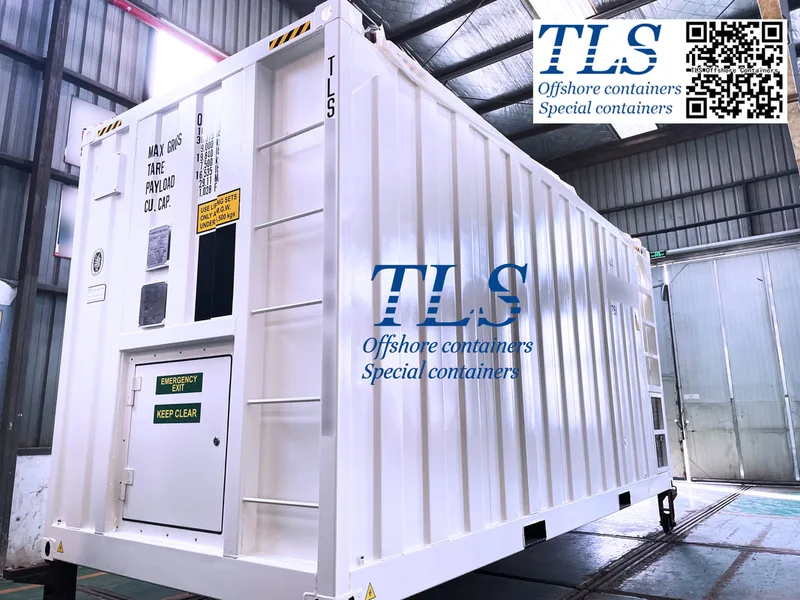
Escape doors can be installed on the walls away from the airlock area in case of crisis, further improving the safety of the cabin. The positive pressure explosion-proof offshore function cabin makes maximum reasonable use of the limited space and provides a more comfortable and safe living and working environment for the staff on the complicated and changeable offshore platform.
- Published on
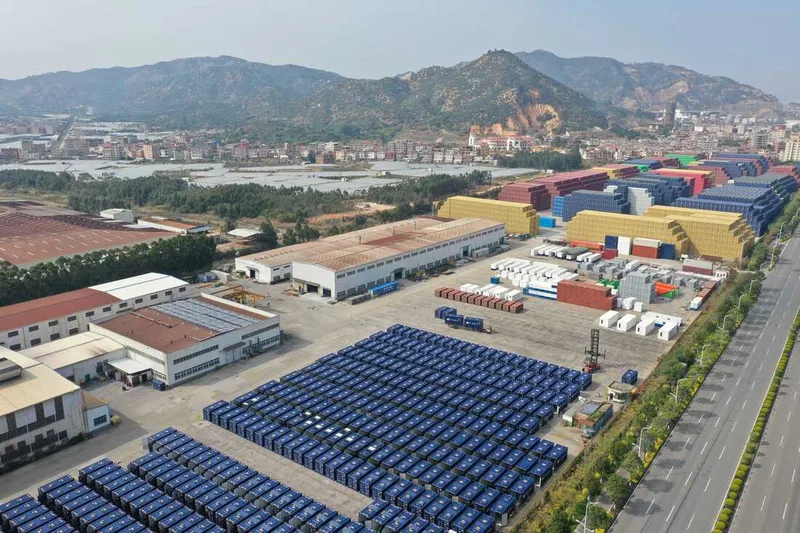
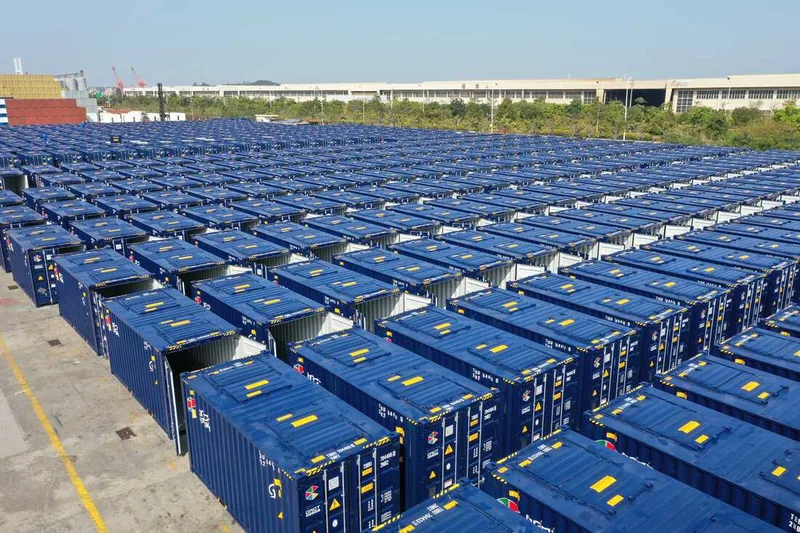
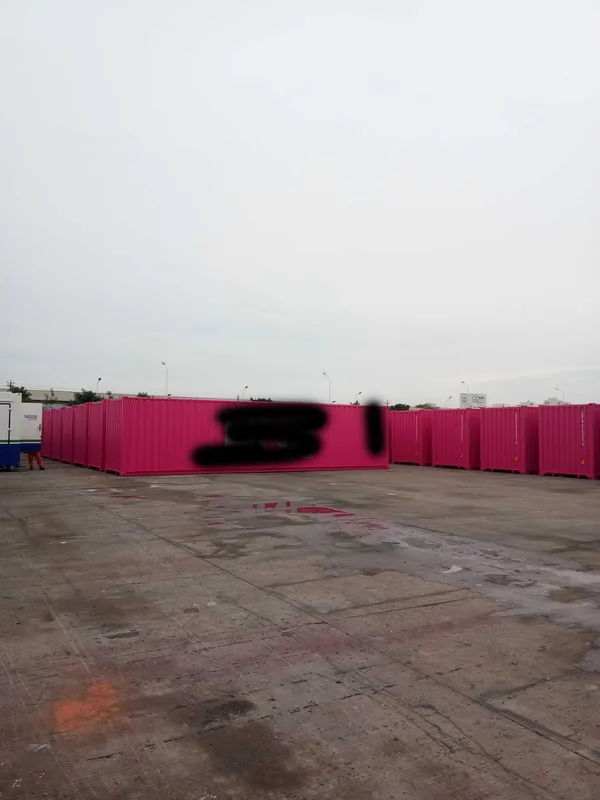
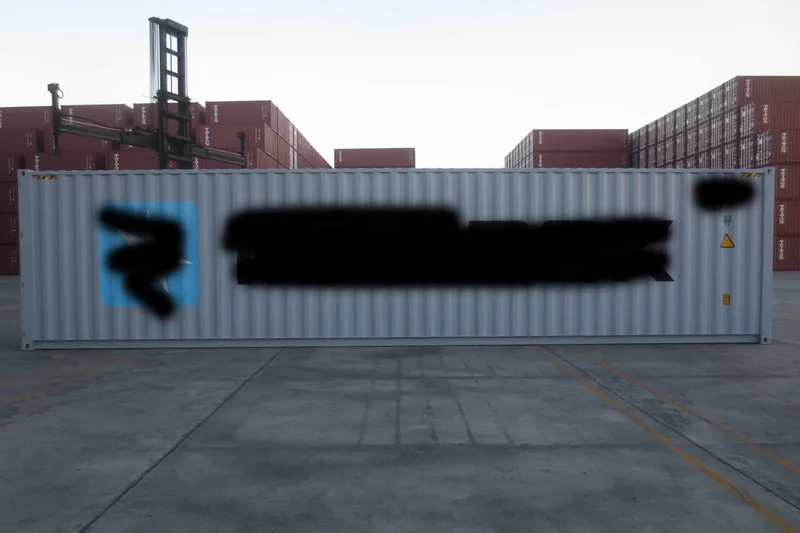
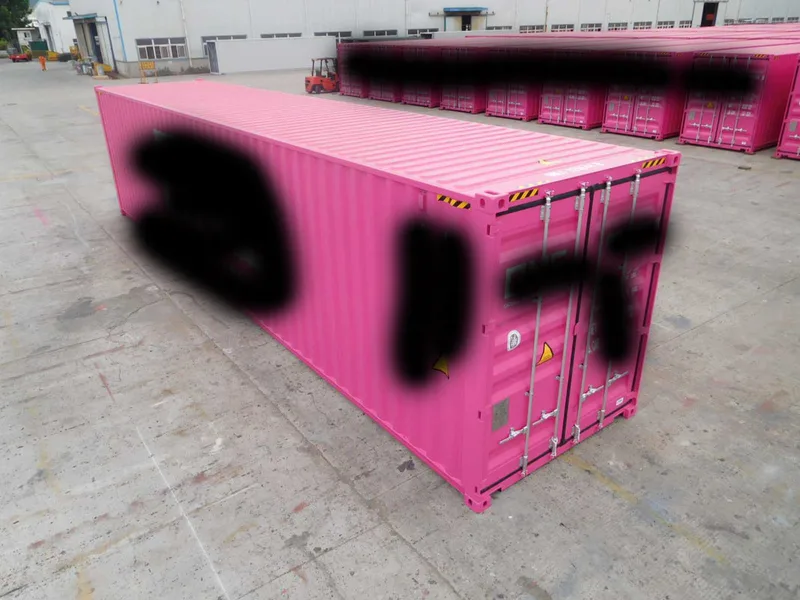
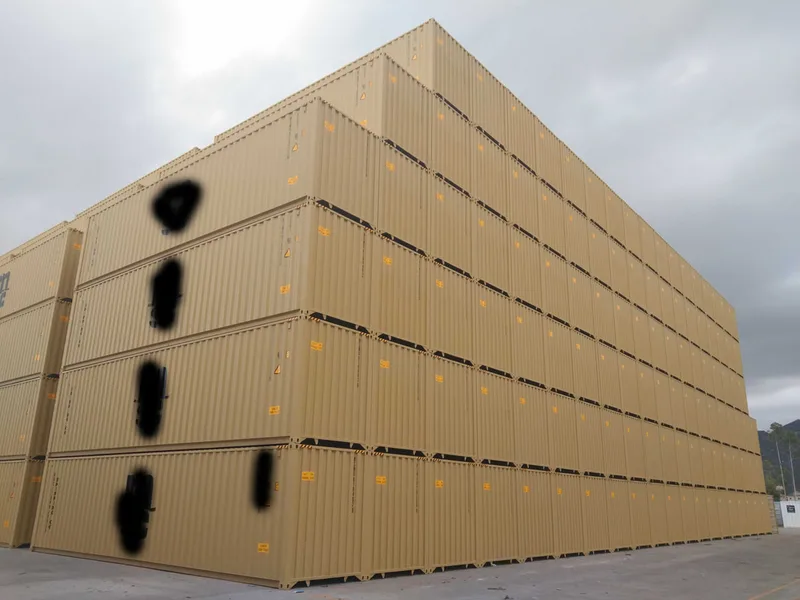
ISO container manufacturing capacity: 500 pcs 20ft containers/day, 400 pcs 40ft containers/day
- Published on
The container lab is a kind of self-contained and movable module that fully meets the requirements of the laboratory. The laboratory container is fully insulated and can operate in extreme weather conditions. It is completely independent and has the necessary compressed air, lighting, and ventilation systems. It can be customized to the customer's needs.
The container described herein is designed for offshore containers, and is suitable for the environmental conditions imposed by these modes of transport for the carriage of general cargo by road, rail and sea (above or below deck).
All materials used in the construction will be to withstand extremes of temperature range from -20 ℃ to +60 ℃ without effect on the strength of the basic structure and watertightness.
Please download workshop container, lab container brochure for reference.
The container described herein is designed for offshore containers, and is suitable for the environmental conditions imposed by these modes of transport for the carriage of general cargo by road, rail and sea (above or below deck).
All materials used in the construction will be to withstand extremes of temperature range from -20 ℃ to +60 ℃ without effect on the strength of the basic structure and watertightness.
Please download workshop container, lab container brochure for reference.
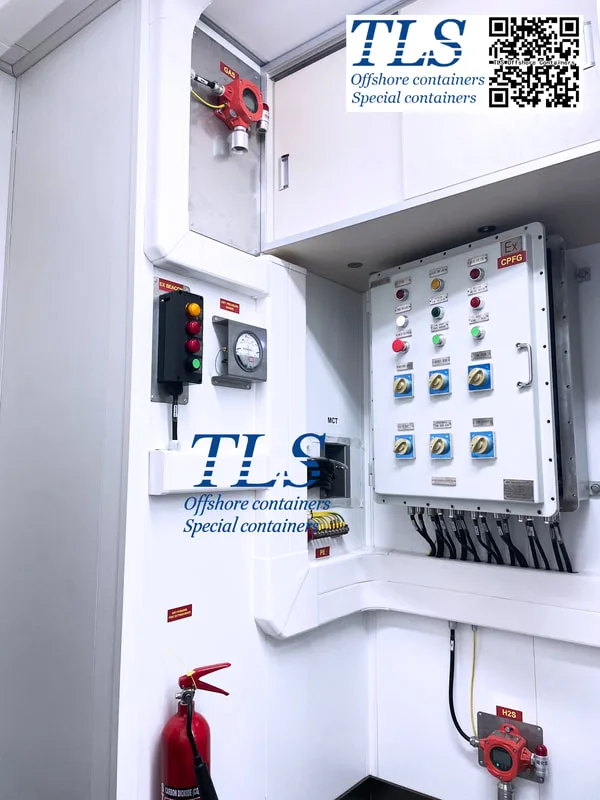
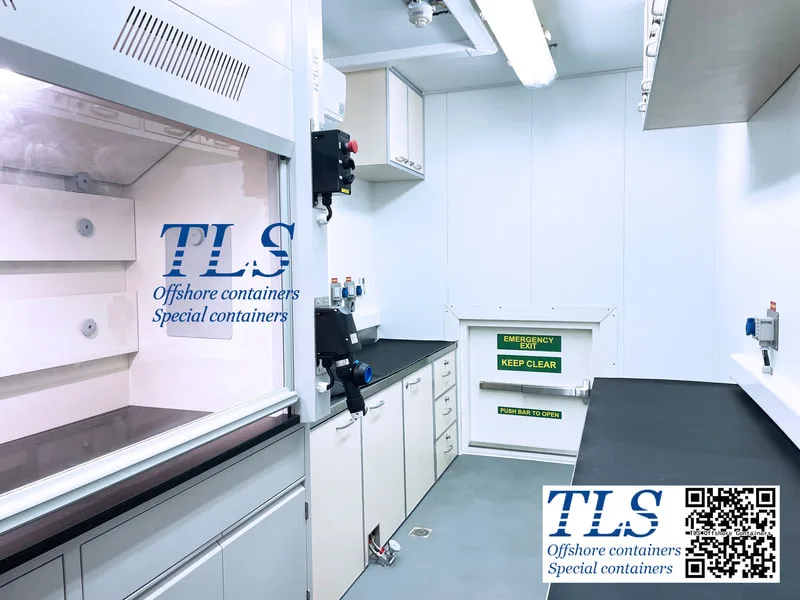
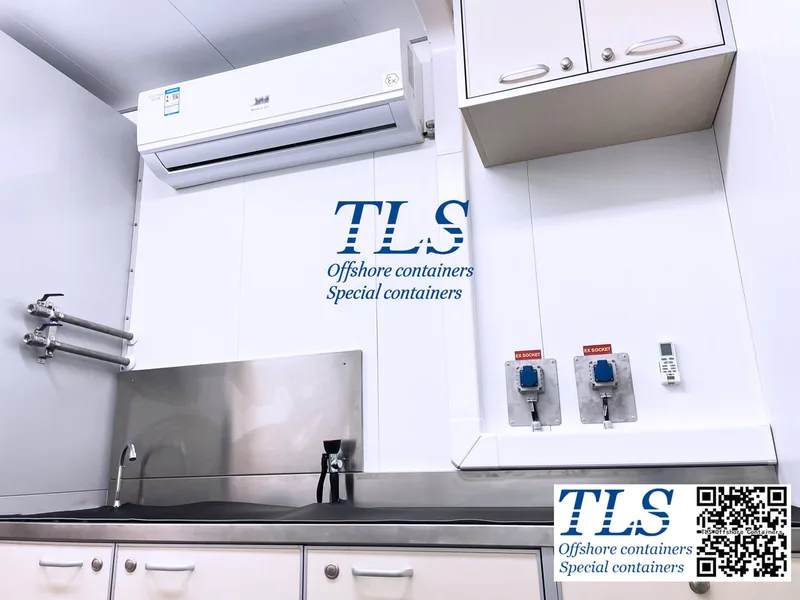
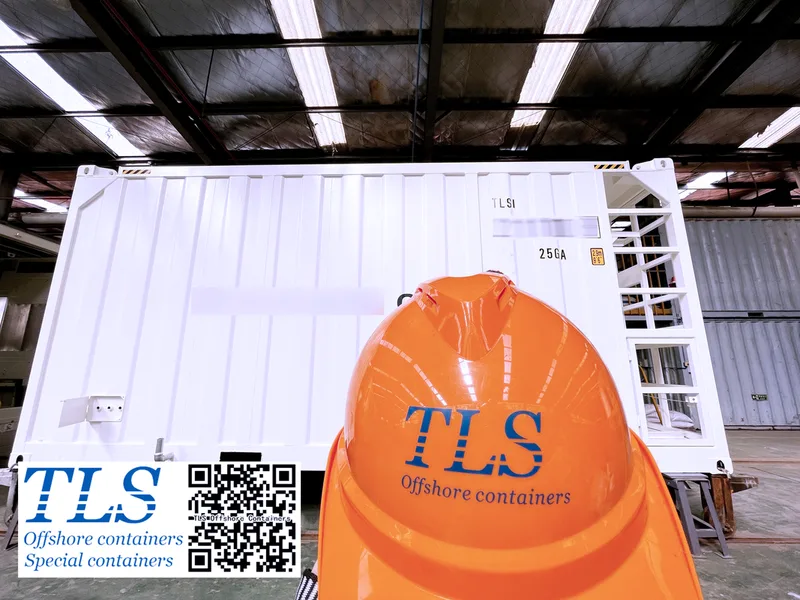
- Published on
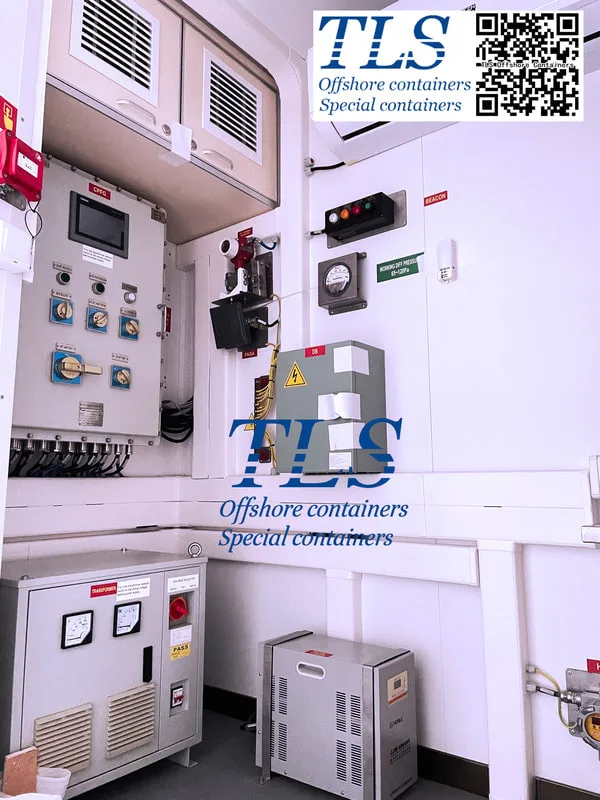
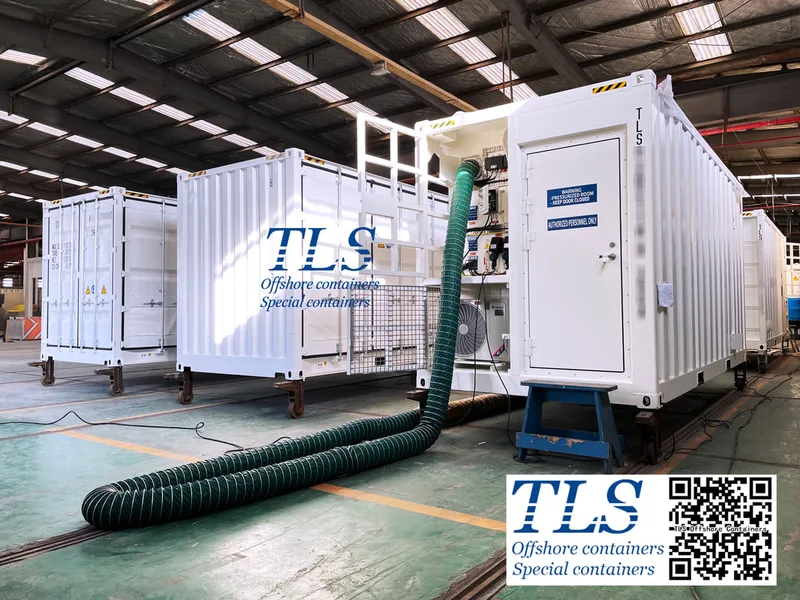
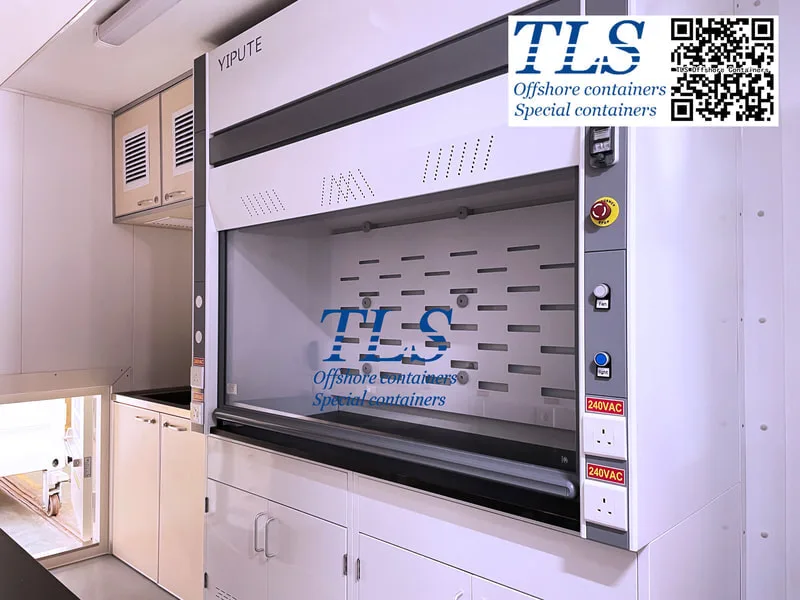
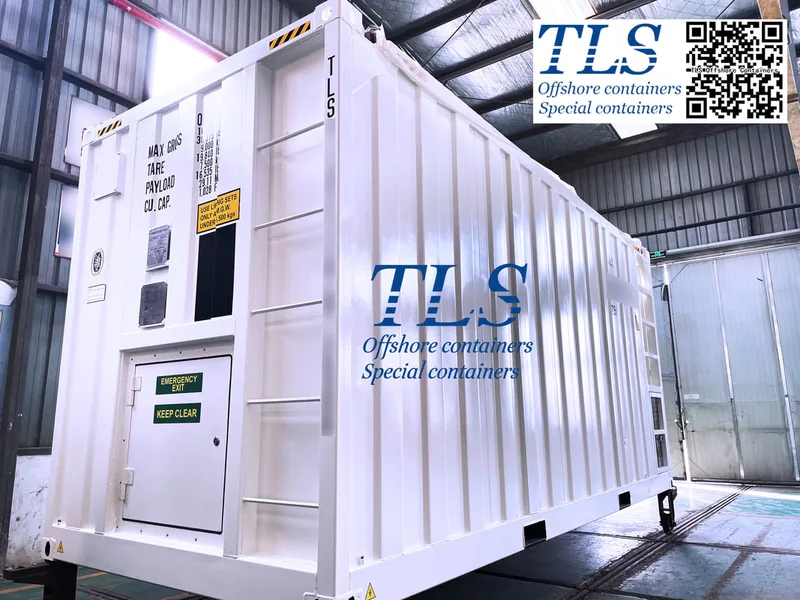
20HC offshore laboratory containers were designed and manufactured according to client's specific requirement.
Features
Features
- DNV2.7-1 / EN12079 certification
- CSC plated
- A60 fire rating
- An autonomous fire, gas and smoke detection system.
- A self‐contained Heat, Ventilation and Air Conditioning (HVAC) system, with fast-plug connection to rig power supply system
- Water supply system with connections to rig supply system
- Experiment hood with exhaust fan, negative pressurisation
- Lab bench
- Work desk with phone connection possibilities, computer and Local Area Network (LAN) access.
- Working and storage furniture
- Stainless steel sink unit with raised edge, large sink and drainage area.
- Under bench and over bench cabinets for storage of consumables.
- Classified for zone 2 hazardous area on request.
- Zone 2 electrics and lighting on request.
- Anti-slip flooring
- Ex light, switch, socket, cabling
- Quick and easy hook up to on-board services
- Designed for easy stacking
- Compliant with ATEX, IECEx standard on request.
- Published on
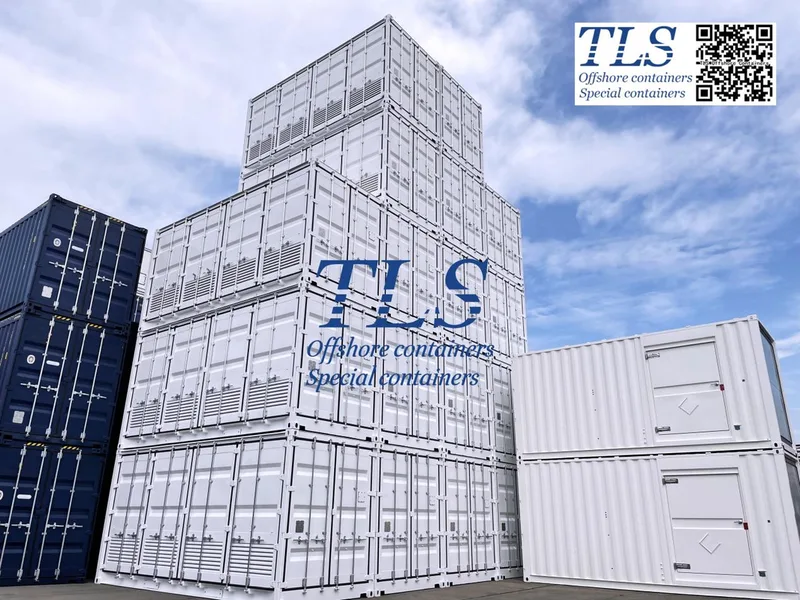
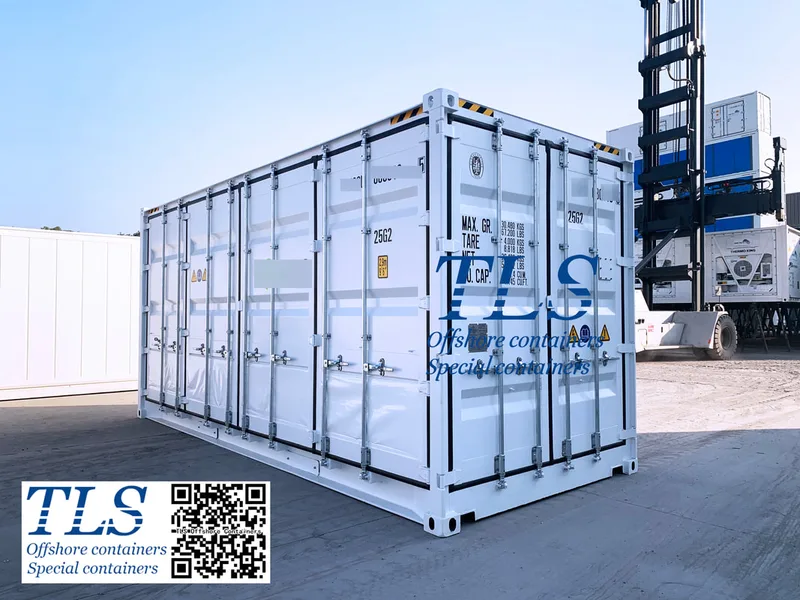
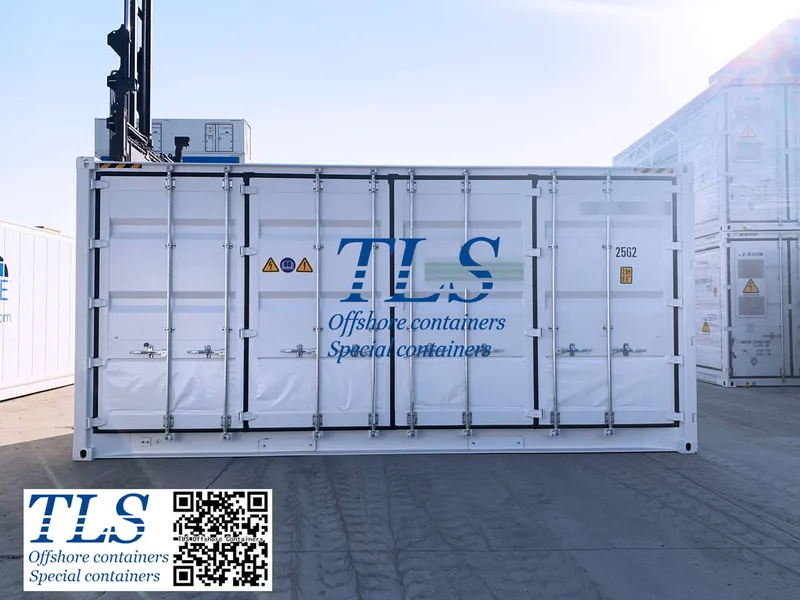
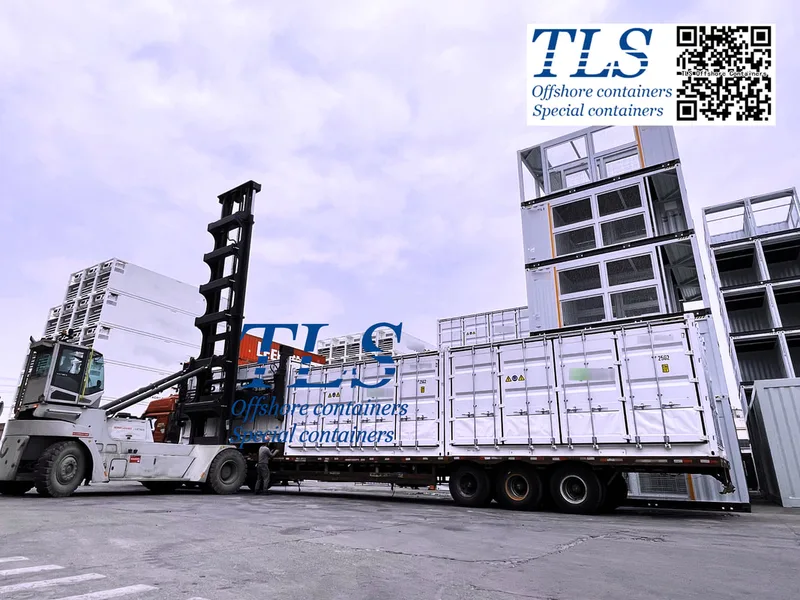
Two batches of energy storage containers customized by customers have been successfully delivered. Each manufacturing process has passed our strict quality inspection. High quality and high requirements are our commitment to customers.
Our containerised energy storage system (BESS) is the perfect solution for large-scale energy storage projects. The energy storage containers can be used in the integration of various storage technologies and for different purposes.
Any requirements, please don't hesitate to contact us.
Our containerised energy storage system (BESS) is the perfect solution for large-scale energy storage projects. The energy storage containers can be used in the integration of various storage technologies and for different purposes.
Any requirements, please don't hesitate to contact us.
- Published on
Whatever the container is used for, the key to workplace safety and preventing employee injury is correctly stacking. So how to safety stack ISO containers or DNV2.7-1 offshore containers and What is the maximum number of ISO shipping containers or the DNV2.7-1 offshore containers in a stack?
- ISO Container stacking layers:
Shipping ISO containers may be stacked up to nine layers.
- DNV 2.7-1 offshore containers module stacking layers:
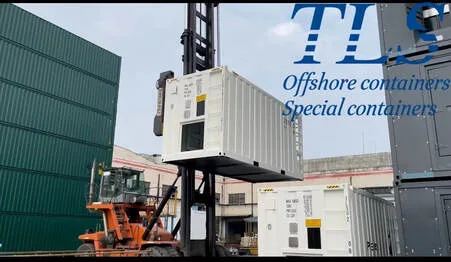
A height of three floors or more will require more modification work to ensure that the final build is structurally safe, as well as a wider range of administrative tasks, such as planning permission applications.
- Published on
"ONSHORE ISO SHIPPING CONTAINERS" VS "OFFSHORE DNV SHIPPING CONTAINERS"
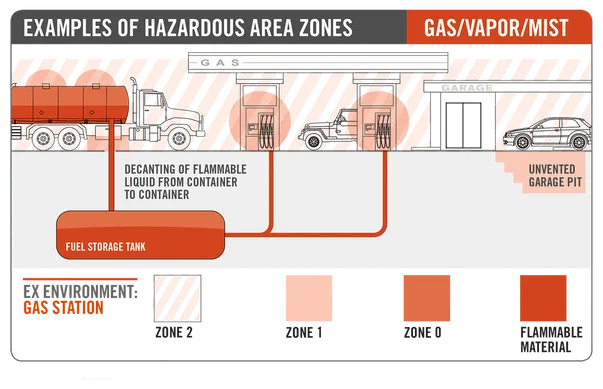
DIFFERENT HAZARDOUS AREAS HAVE A CERTAIN IMPACT ON THE DESIGN OF CONTAINERS, BUT HOW TO IDENTIFY ZONE 0, ZONE 1, AND ZONE 2 HAZARDOUS AREAS?
- EXPOSURE TO HARSH ENVIRONMENTS
- Offshore containers are often left exposed to open sea on the decks of supply vessels, and also loaded to platforms in harsh weather conditions, this also means that the minimum design temperature is normally specified as -20° C and the primary structure requires material of sufficient toughness for -20° C.
- LOADING AND UNLOADING FORCES
- Because many offshore containers cannot be used with typical lifting equipment such as spreader beams, the methods of loading and unloading put different types of pressure on the structures of offshore containers. Offshore containers are supplied with a permanently installed sling set. Most do not have corner castings, and if they do, they are not allowed to be lifted from them.
- NON-STANDARD DESIGNS
- Most offshore containers are built to fit a specific piece of equipment, and therefore, do not fit into the ISO container category.
DIFFERENT HAZARDOUS AREAS HAVE A CERTAIN IMPACT ON THE DESIGN OF CONTAINERS, BUT HOW TO IDENTIFY ZONE 0, ZONE 1, AND ZONE 2 HAZARDOUS AREAS?
- Zone 0: the area where explosive gases persist for a long time or will occur frequently.
- Zone 1: the area where an explosive atmosphere may occasionally occur during normal operation. It may exist as a result of repair, maintenance operations, or leaks.
- Zone 2: the place where an explosive atmosphere is unlikely to occur during normal operations, but if it does, it will only last for a short time. These areas become dangerous only in the event of an accident or some unusual operating conditions.
- Published on
We customize the container according to the customer's requirements; the containers will be combined with the customer's requirements and the advice of our experienced engineers. We don't have containers in stock, but we will provide the container at the agreed time.
All customized containers will undergo strict quality inspection, and customers will finally receive the products that best suit their needs.
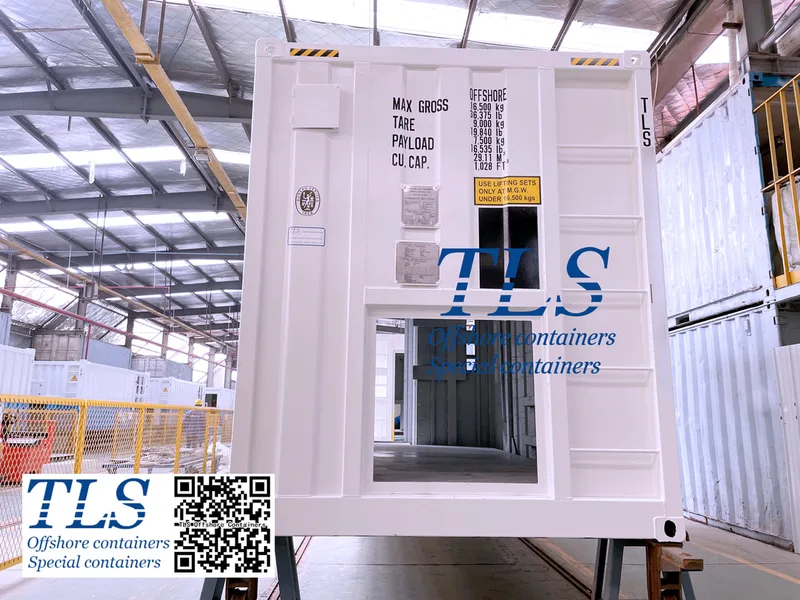
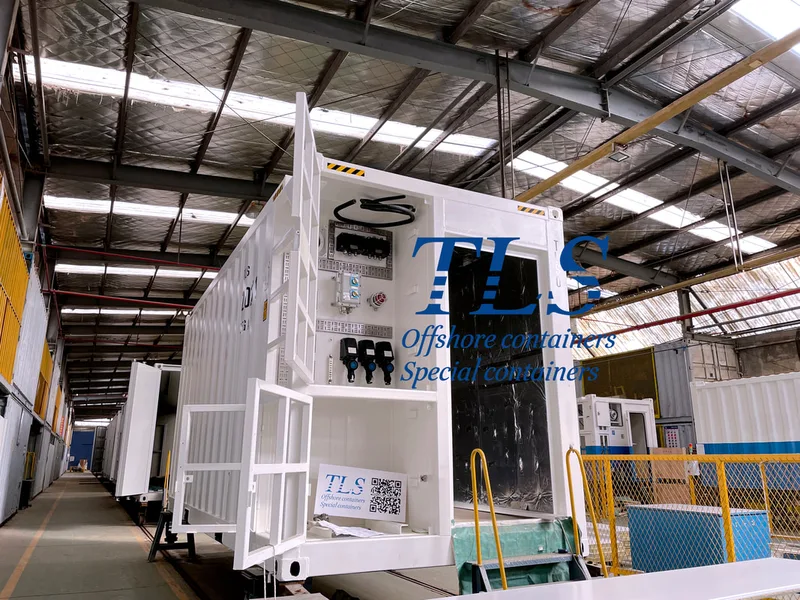
pressurized container being installed on the production line
- Published on
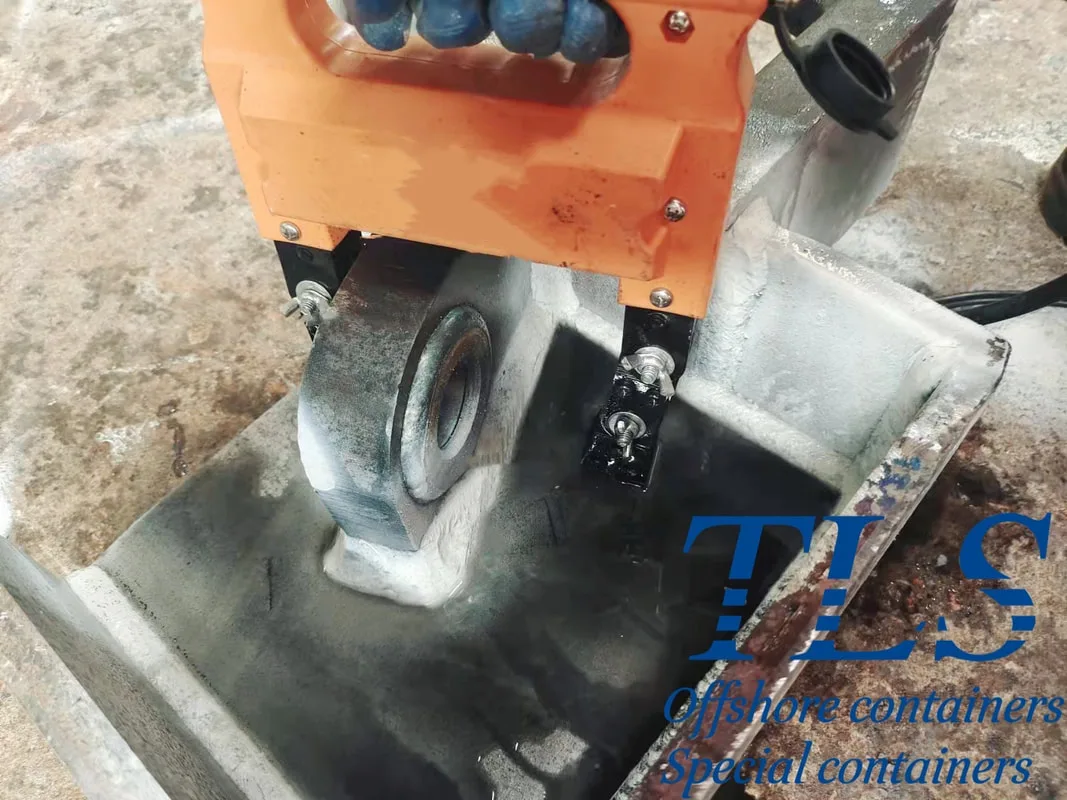
No.The ISO container does not have pad eyes but the offshore containers have the pad eyes.The pad eyes of offshore containers with DNV2.7-1 certification must be designed according to DNV2.7-1 standard.
For the pad eyes DNV-2.7-1 certification:
For the pad eyes DNV-2.7-1 certification:
- It is not approved by the third party classification society. The third party classification society will perform the lifting and drop tests on site and then issues a survey report/inspection certificate for pad eye only.
- Most of time, the drop test is not performed but only the load test. Then the third party issues a survey report/inspection certificate for pad eye only and load test according to the DNV-2.7-1 standard for offshore containers.